

What's Happening?
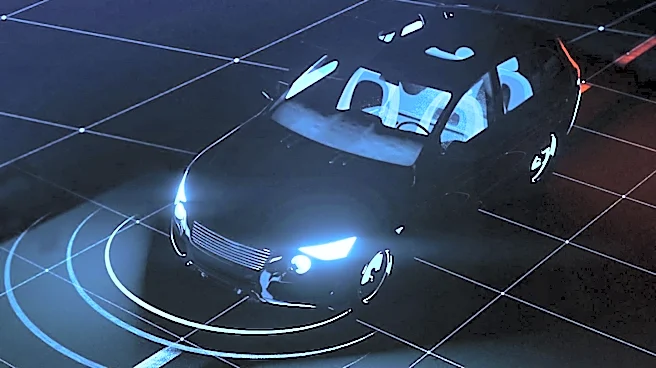
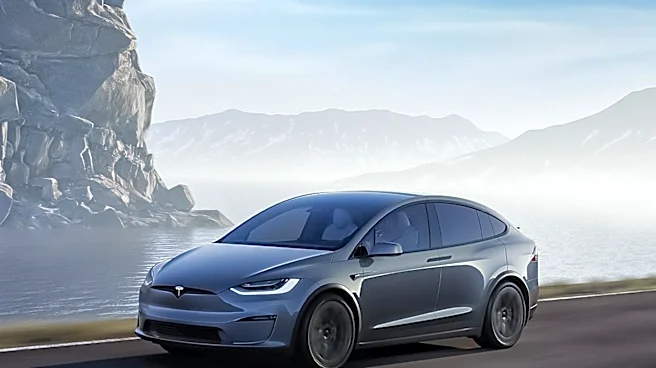
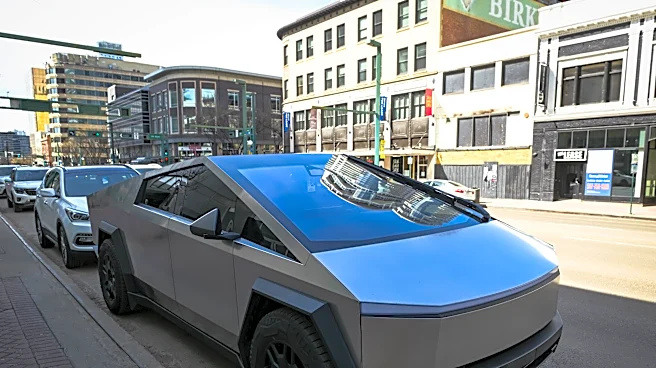
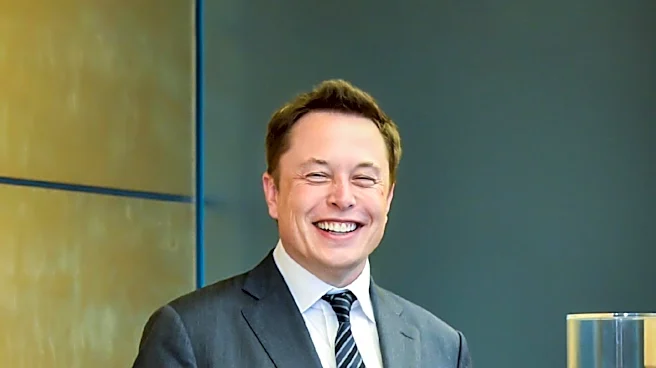
Tesla CEO Elon Musk announced that the company is preparing for a broader market rollout of its Full Self-Driving (FSD) version 15 software next month. This update is expected to be part of the electric vehicle manufacturer’s holiday update. The FSD software is Tesla's
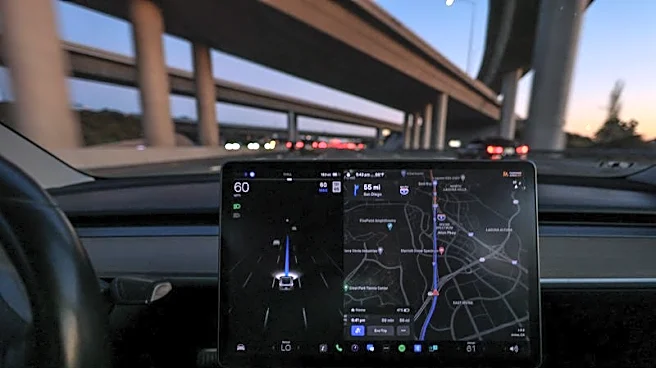
advanced driver assistance system, designed to enable the vehicle to drive autonomously to a destination entered into the navigation system, performing actions such as changing lanes, navigating highway interchanges, and making turns. The upcoming version 15 signifies a continued effort by Tesla to enhance its autonomous driving capabilities and make the technology more widely available to its customers. This development follows previous iterations of the FSD software, which have been progressively rolled out to a limited number of users for testing and feedback.
Why It's Important?
The broader rollout of Tesla's FSD version 15 is significant for several reasons. For the automotive industry, it represents a continued push towards autonomous driving technology, potentially accelerating the adoption and development of similar systems by competitors. For consumers, increased availability of FSD could offer enhanced convenience and safety features, though the full extent of its capabilities and regulatory approvals remain key factors. The success and reliability of FSD version 15 will also impact Tesla's market position and its valuation, as the company has heavily invested in and promoted its self-driving technology as a core differentiator. Furthermore, the expansion of FSD raises ongoing discussions about regulatory frameworks, liability in autonomous driving incidents, and public perception of self-driving cars, which could influence future policy decisions and consumer trust in the technology.
What's Next?
Following Elon Musk's announcement, the next step will be the actual release of FSD version 15 as part of Tesla's holiday update next month. This release will likely be accompanied by further details on its new features, improvements, and the scope of its availability. Tesla owners who have purchased the FSD package will anticipate receiving the update, which will then undergo real-world testing by a larger user base. Regulators and safety organizations will likely monitor the performance and safety of the new version closely, potentially leading to further discussions or guidelines regarding autonomous driving systems. Competitors in the automotive and technology sectors will also be observing this rollout to assess Tesla's progress and adjust their own autonomous driving strategies accordingly. Public perception and media coverage following the release will play a crucial role in shaping the narrative around the advancement of self-driving technology.
Beyond the Headlines
The continued evolution and broader deployment of Tesla's FSD technology, particularly with version 15, touches upon deeper societal and ethical considerations. The increasing autonomy of vehicles raises questions about the future of human drivers, potential impacts on employment in transportation sectors, and the ethical programming of vehicles in complex decision-making scenarios. Legal frameworks for liability in accidents involving autonomous vehicles are still evolving, and each new iteration of FSD brings these discussions to the forefront. Furthermore, the data collection practices associated with FSD, which are crucial for its development and improvement, raise privacy concerns. The widespread adoption of such technology could also fundamentally alter urban planning, traffic management, and the very concept of car ownership, leading to long-term shifts in how individuals and societies interact with transportation.