




What's Happening?
Citigroup is facing potential delays in its efforts to lift regulatory penalties due to an error at its U.K. unit, which led to an underestimation of risk-weighted assets by $35 billion. This miscalculation could hinder the bank's years-long endeavor
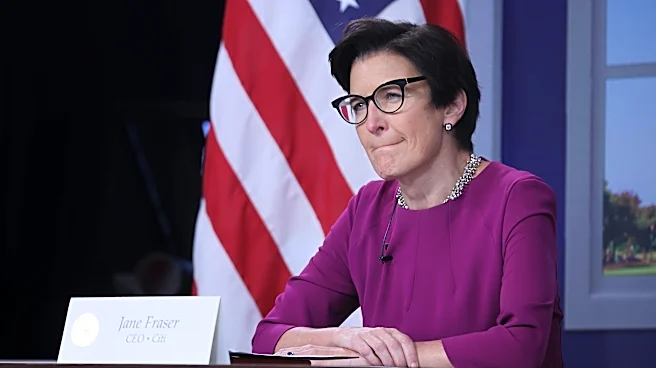
to resolve consent orders imposed by U.S. regulators. Citi Chief Executive Jane Fraser has publicly stated that exiting these consent orders is her top priority. The bank had been targeting the end of this year or the first quarter of next year to submit the necessary paperwork to regulators, a step that could lead to the conclusion of its remediation efforts. However, this recent error, while not considered massive in relation to the bank's overall size, is significant enough to raise questions among U.S. regulators regarding the bank's internal controls and data quality. The original consent orders, which began in 2020, stemmed from deficiencies in risk management, data quality management, and internal controls, following incidents such as the accidental distribution of over $900 million to Revlon lenders.
Why It's Important?
This development is significant because it directly impacts Citi's ability to move past a period of intense regulatory scrutiny and operational overhaul. The consent orders have imposed substantial costs on the bank, forcing it to hire tens of thousands of additional employees to address compliance issues. Delays in lifting these orders could prolong these expenses and continue to constrain the bank's operational flexibility. For U.S. regulators, this error, even if it occurred in a U.K. unit, raises concerns about the reliability of Citi's risk management models and its overall control environment. As former head of the Federal Deposit Insurance Corp., Sheila Bair, noted, any misstep complicates efforts to escape consent orders and reinforces questions about the reliability of models in setting risk-based capital requirements. The situation could lead to a higher bar for regulatory approval, potentially extending the timeline for Citi to achieve full regulatory compliance and operational normalcy.
What's Next?
The immediate next step for Citi will likely involve addressing the U.K. unit's error and providing comprehensive explanations and remediation plans to U.S. regulators. While some analysts believe the error is unlikely to completely derail the lifting of consent orders, it will undoubtedly lead to increased scrutiny and potentially a longer review period. Regulators, including the Federal Reserve and the Office of the Comptroller of the Currency, will be closely examining whether this incident indicates broader systemic issues within Citi's risk management framework. The bank will need to demonstrate robust internal controls and data accuracy across all its global operations to reassure regulators. This could involve further investments in technology and personnel dedicated to compliance and risk management, potentially pushing back the timeline for submitting the final paperwork and ultimately for the consent orders to be lifted.
Beyond the Headlines
Beyond the immediate regulatory implications, this incident highlights the ongoing challenges faced by large, globally interconnected financial institutions in maintaining consistent and accurate risk management across diverse international operations. Even seemingly localized errors can have significant repercussions for a bank's overall regulatory standing, especially when under existing consent orders. This situation also underscores the increasing reliance on complex models for calculating risk-weighted assets and the inherent vulnerabilities when these models contain errors or are based on flawed data. The incident could prompt broader discussions among regulators about the oversight of international banking operations and the need for more robust, globally consistent standards for risk reporting and internal controls. It also serves as a reminder that even with significant investments in remediation, achieving full regulatory satisfaction is a continuous and demanding process for major financial players.