




What's Happening?
Manufacturers are facing increasing pressures from rising costs, supply chain disruptions, and rapid technological changes. In this environment, an opinion piece in Newsweek emphasizes that effective efficiency strategies must prioritize listening to
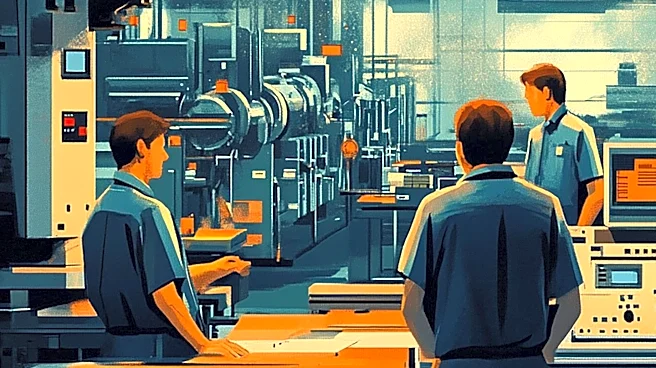
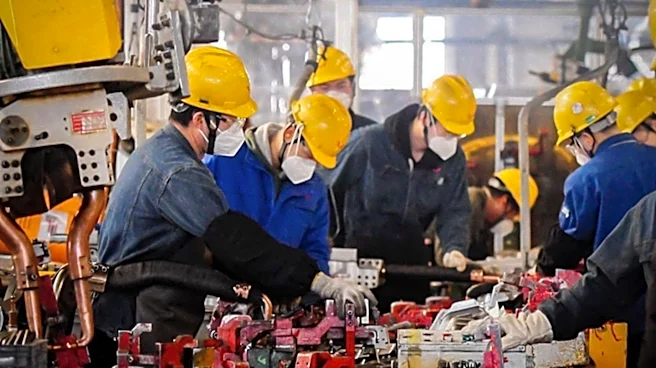
factory floor workers. The author, Ashley Buchanan-Snyder, CEO of Elite Industrial Solutions LLC, argues that decisions made far from the production line often overlook the critical insights of those directly involved in manufacturing. According to the National Association of Manufacturers’ Q2 2026 survey, 83.1% of manufacturers cited rising raw material costs as their top challenge, and 71.8% pointed to trade uncertainty. These issues directly impact floor workers through idle time and rushed schedules. The workforce is also evolving, with older workers staying longer and younger workers bringing different expectations, leading to communication breakdowns and talent wastage. Manufacturers cannot afford to lose skilled personnel, as finding and replacing experienced workers is difficult. When floor workers feel unheard, they stop sharing small ideas that drive operational improvements, leading to a loss of valuable knowledge when they depart.
Why It's Important?
The call to prioritize factory floor communication is crucial for the U.S. manufacturing sector's competitiveness and resilience. Ignoring the insights of frontline workers can lead to inefficiencies, increased operational costs, and higher employee turnover, directly impacting a company's bottom line. In an era of complex supply chains and rapid technological advancements, the ability to quickly adapt and innovate often stems from practical, on-the-ground knowledge. Losing skilled workers due to a lack of engagement or feeling unheard represents a significant drain on institutional knowledge and training investments. This issue affects not only individual companies but also the broader manufacturing ecosystem, potentially hindering national productivity and innovation. By fostering a culture of open communication, manufacturers can better navigate challenges like supply shocks, retain valuable talent, and continuously improve their processes, ensuring long-term sustainability and growth.
What's Next?
Manufacturers are advised to implement strategies that foster clear and open communication channels with all facility personnel, particularly those on the factory floor. This includes tracking floor-level problems with the same seriousness as financial issues. Leaders should actively seek input from workers closest to the production process, as they are best positioned to identify incremental improvements. While technology like AI can assist in data analysis and process optimization, it should support the workforce rather than replace human judgment. Companies that combine technological tools with genuine communication are more likely to respond effectively to supply shocks, maintain worker engagement, and build a culture of continuous improvement. Conversely, those that neglect the factory floor risk losing essential personnel and operational efficiency.
Beyond the Headlines
The emphasis on listening to factory floor workers touches upon deeper themes of organizational culture, employee empowerment, and the human element in an increasingly automated industrial landscape. It highlights a potential disconnect between management and labor, where strategic decisions may not fully account for operational realities. This perspective suggests that true innovation and efficiency are not solely driven by top-down directives or advanced technology, but also by the collective intelligence and experience of the entire workforce. Cultivating an environment where every employee feels valued and heard can lead to greater job satisfaction, loyalty, and a more resilient organization. This approach also challenges the traditional hierarchical structures in manufacturing, advocating for a more collaborative and inclusive model that recognizes the intrinsic value of every role in the production process.