





What's Happening?
Mike Rivard of Long Beach and Tyler Caros of Lakewood have co-authored a new textbook titled, “Drone Dynamics: The Technology, Science and Piloting of Commercial Drones.” This textbook is described as the first of its kind in the United States specifically
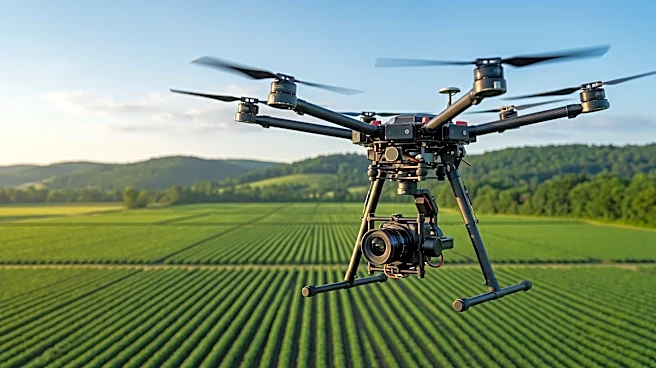
designed for high school and community college students, providing a practical foundation for commercial drone operations. Published by Goodheart-Wilcox, a company with a long history in educational resources, the book aims to equip students with the knowledge needed to enter the rapidly expanding drone industry. Rivard, founder of RadFlight, one of the first commercial drone companies in the U.S., and Caros, head of sales and marketing at A2Z Drone Delivery, Inc., are recognized as drone visionaries. The textbook covers various applications of drones, from agriculture and public safety to real estate and entertainment, and includes information on obtaining remote pilot certification from the Federal Aviation Administration.
Why It's Important?
The publication of “Drone Dynamics” signifies a crucial step in formalizing education for the burgeoning commercial drone industry in the U.S. By targeting high school and community college students, the textbook creates an accessible pathway for a new generation to acquire essential skills and certifications, addressing the growing demand for qualified drone pilots and related services. This initiative can help bridge the skills gap in a sector that has evolved from a niche hobby into a significant economic force with diverse applications across multiple industries. The textbook's focus on practical foundations and FAA certification preparation directly supports workforce development, potentially leading to increased employment opportunities and technological innovation within the U.S. economy. The integration of drone technology in sectors like agriculture, construction, and public safety can enhance efficiency, reduce costs, and improve safety, contributing to overall economic growth and competitiveness.
What's Next?
The textbook is expected to be adopted by educational institutions across the U.S., establishing a standardized curriculum for commercial drone operations at the high school and community college levels. This will likely lead to an increase in students pursuing FAA certification and entering technical workforce pathways related to drones. The authors anticipate a continued growth in demand for drone pilots and drone-related services, suggesting that the textbook will play a vital role in preparing individuals for these roles. Further developments could include the expansion of training programs based on the textbook's content, potentially leading to more specialized courses and advanced study opportunities in drone technology. The widespread adoption of this educational resource could also influence future regulatory frameworks and industry standards as a more formally trained workforce emerges.
Beyond the Headlines
The introduction of a dedicated textbook for commercial drones highlights a broader societal shift towards integrating advanced technology into everyday industries. This educational initiative not only addresses the technical aspects of drone operation but also implicitly raises questions about the ethical and legal implications of widespread drone use, such as privacy concerns, airspace management, and data security. The emphasis on FAA certification underscores the increasing need for regulatory oversight in emerging technological fields. Furthermore, the textbook's focus on diverse applications, from monitoring crops to assisting in disaster response, illustrates the transformative potential of drones to reshape various sectors, potentially leading to new business models, job categories, and even changes in how public services are delivered. This educational foundation could foster a culture of innovation and responsible technological adoption.