
What's Happening?
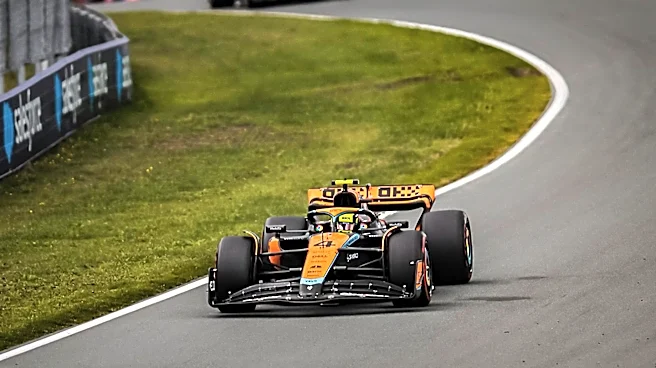
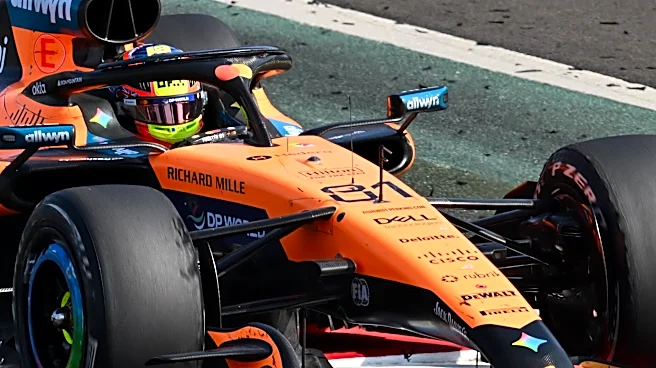
McLaren boss Andrea Stella has confirmed that the team will introduce new upgrades at the Las Vegas Grand Prix. These enhancements are intended to complement the team's existing Sāo Paulo package and will serve
as the foundational elements for McLaren's 2027 Formula 1 car. The team, currently fourth in the constructors' standings, has shown a resurgence in performance, including Lando Norris's victory at Interlagos. McLaren had previously introduced a redesigned front wing, new rear and beam wings, and floor revisions in Brazil, with the front-wing concept expected to carry over to the next season. This strategic development follows a period where McLaren regained winning pace after initial upgrades in Hungary and the Netherlands, only to see rivals catch up with their own developments.
Why It's Important?
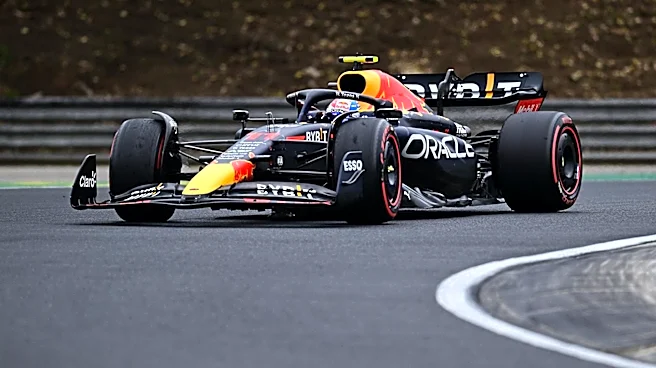
This development is significant for McLaren's long-term competitiveness in Formula 1. By using the Las Vegas Grand Prix upgrades as a foundation for their 2027 car, McLaren is demonstrating a forward-thinking approach to car development, aiming for sustained performance improvements. The continuous cycle of upgrades and the strategic planning for future seasons are crucial in the highly competitive world of Formula 1, where technological advancements and aerodynamic efficiency are paramount. This strategy could allow McLaren to optimize their development resources and ensure a more consistent performance trajectory, potentially challenging top teams like Red Bull more effectively in the coming years. For fans and stakeholders, it signals McLaren's commitment to returning to the top tier of motorsport.
What's Next?
The immediate focus will be on the performance of the new upgrades at the Las Vegas Grand Prix and how they integrate with the existing Sāo Paulo package. Following this, the team will continue to refine and build upon these foundational elements for their 2027 Formula 1 car. The success of these initial upgrades will likely influence the subsequent development path and resource allocation for future seasons. Competitors will be closely observing McLaren's performance, as any significant gains could prompt other teams to accelerate their own development cycles. The team's ability to maintain its 'encouraging trajectory' will depend on the effectiveness of these new components and their strategic integration into future car designs.
Beyond the Headlines
The strategic decision to use current-season upgrades as a foundation for a future car highlights a broader trend in Formula 1 towards integrated, long-term development cycles. This approach minimizes wasted effort and maximizes the return on investment in research and development. It also underscores the intense pressure on teams to innovate continuously, not just for immediate race wins but for sustained success over multiple seasons. The emphasis on foundational elements suggests a shift towards more modular and adaptable car designs, allowing for quicker iteration and response to rule changes or competitive pressures. This could lead to more stable and predictable performance curves for teams that adopt similar strategies, potentially impacting the overall competitive landscape of Formula 1.