





What's Happening?
Businesses in the San Francisco Bay Area are increasingly implementing multifunctional furniture solutions to address the challenge of high commercial rents and limited office space. This trend involves utilizing furniture that serves multiple purposes,
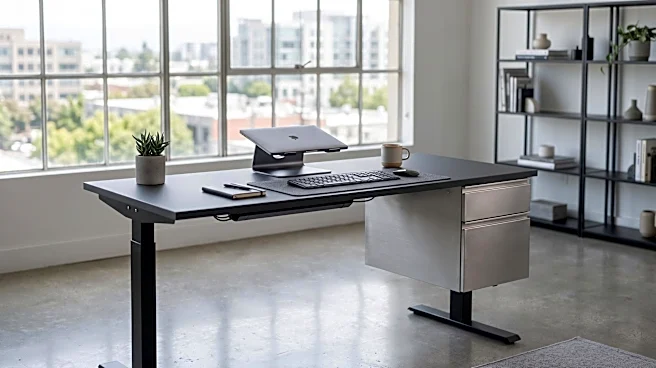
such as desks with built-in storage, modular seating arrangements, and vertical storage units. The goal is to maximize utility and efficiency within smaller footprints without compromising comfort or productivity. Companies are opting for height-adjustable standing desks, which support employee wellness without requiring additional floor space, and modular seating that can be reconfigured for various needs, from client meetings to team huddles. Vertical storage, including tall shelving and wall-mounted cabinets, is being used to increase storage capacity by building upwards rather than outwards. Additionally, foldable and nesting furniture allows for flexible use of space, enabling rooms to serve different functions throughout the day. Custom built-ins are also gaining traction for irregular floor plans common in older Bay Area buildings, ensuring every corner is utilized efficiently.
Why It's Important?
The adoption of multifunctional furniture in Bay Area offices signifies a strategic response to the region's high commercial real estate costs, impacting how businesses manage their physical workspaces and operational budgets. By optimizing space, companies can potentially reduce their overall real estate footprint or accommodate more employees within existing spaces, leading to cost savings. This approach also fosters a more dynamic and adaptable work environment, crucial for the evolving needs of modern businesses, especially those with hybrid work models. The emphasis on employee wellness, through features like height-adjustable desks, can contribute to increased productivity and job satisfaction, potentially reducing employee turnover. Furthermore, the trend highlights a shift towards more thoughtful and intentional office design, where every furniture piece is expected to provide maximum value, influencing furniture manufacturers and designers to innovate with space-saving and versatile products. This could set a precedent for other high-cost urban centers facing similar space constraints.
What's Next?
The trend of integrating multifunctional furniture is expected to continue and evolve as Bay Area businesses seek further efficiencies and adaptability in their workspaces. Future developments may include more advanced smart furniture with integrated technology, further enhancing functionality and connectivity. We may see an increased demand for furniture that supports diverse work styles, from individual focused work to collaborative team efforts, all within a flexible layout. Furniture designers and manufacturers are likely to respond with more innovative, customizable, and aesthetically pleasing solutions that cater to specific industry needs and architectural challenges. Additionally, as companies continue to embrace hybrid work models, there will be a growing need for furniture that facilitates hot-desking and shared workstations, requiring robust and easily adjustable designs. The success of these strategies in the Bay Area could also influence office design trends in other major U.S. cities facing similar real estate pressures, leading to broader adoption of these space-saving and flexible furniture solutions.
Beyond the Headlines
Beyond the immediate benefits of space optimization and cost savings, the widespread adoption of multifunctional furniture in the Bay Area reflects a deeper cultural shift towards efficiency and adaptability in the modern workplace. This trend challenges traditional notions of office design, moving away from static, single-purpose furniture towards dynamic, reconfigurable environments. It underscores a growing awareness of how physical space impacts employee well-being and productivity, pushing companies to invest in solutions that support both. Ethically, this approach can promote more sustainable practices by encouraging the use of fewer, more versatile pieces of furniture, potentially reducing waste. Legally, as offices become more flexible, there might be implications for lease agreements and building codes, which may need to adapt to accommodate these evolving workspace configurations. Culturally, it signifies a move towards more agile and responsive organizational structures, where the physical environment mirrors the fluid nature of contemporary work, fostering innovation and collaboration in increasingly compact settings.