








What's Happening?
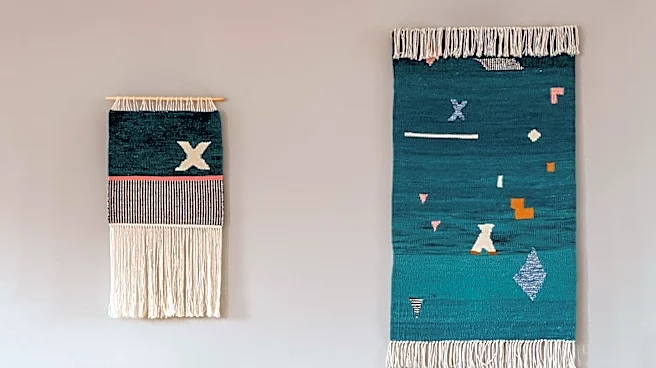
Tapestries are undergoing a significant revival as decorative art, moving beyond their historical function of insulating cold buildings to become central elements in contemporary interior design. This resurgence is fueled by a growing appreciation for
handmade textiles and the unique storytelling they offer. Artists like Andrew Pierce Scott are creating textile tablescapes from fabric offcuts, while Oscar Crabb hand-cuts, dyes, and sews pieces using second-hand fabric and plant-based pigments. These modern interpretations emphasize the human touch and materiality, inspiring intimacy and individuality in home decor. The trend is seen as a natural evolution of craft-led interior design, with designers and art consultancies actively promoting these unique textile artworks.
Why It's Important?
The renewed interest in tapestries signifies a broader shift in U.S. interior design and consumer preferences towards artisanal, unique, and sustainable home furnishings. This trend benefits independent artists and small businesses specializing in textile art, offering them new avenues for market entry and growth. For consumers, it provides an alternative to mass-produced decor, allowing for more personalized and character-rich living spaces. The emphasis on handmade items and natural pigments also aligns with increasing consumer demand for ethical and environmentally conscious products. This movement could influence related industries, such as textile manufacturing and art curation, by fostering innovation in materials and design techniques.
What's Next?
The trend is expected to continue gaining momentum, with more designers and retailers incorporating tapestries and textile art into their offerings. Exhibitions and art consultancies will likely play a crucial role in showcasing new artists and styles, further integrating these pieces into mainstream interior design. Consumers can anticipate a wider variety of tapestry styles, from traditional narrative pieces to abstract contemporary designs, available through various channels including online marketplaces and specialized galleries. The focus on unique, handmade items suggests a sustained demand for craftsmanship, potentially leading to increased workshops and educational programs in textile arts.
Beyond the Headlines
This tapestry renaissance reflects a deeper cultural yearning for authenticity and connection in an increasingly digital world. The tactile nature of textiles and the visible 'mark-making' of artists offer a counterpoint to the uniformity of mass production, inviting a more intimate engagement with objects in one's living space. Ethically, the use of second-hand fabrics and plant-based dyes highlights a growing consciousness about sustainability and the environmental impact of consumer goods. This movement could also inspire a re-evaluation of traditional crafts, elevating them to the status of fine art and fostering a greater appreciation for the labor and skill involved in their creation.