






What's Happening?
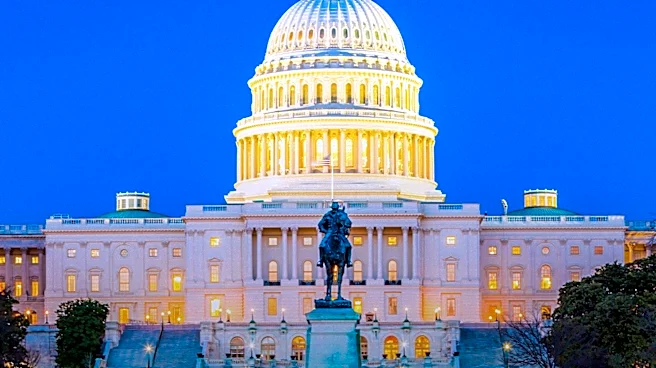
The Blockchain Association, a U.S. crypto trade group, has sent a letter to congressional leaders, including Senate Majority Leader John Thune, Senate Minority Leader Chuck Schumer, House Speaker Mike Johnson, and House Minority Leader Hakeem Jeffries.
The association is advocating for bipartisan digital-asset tax legislation that includes a meaningful de minimis exemption for small crypto transactions. This exemption would prevent everyday low-value spending from triggering the same complex tax calculations as major investment sales. Additionally, the group proposes treating qualifying stablecoins more like cash for tax purposes and suggests a framework for rewards from mining and staking that taxes them upon disposition rather than at receipt. The Blockchain Association has also launched a website to facilitate communication between digital-asset users and lawmakers regarding tax policy.
Why It's Important?
The current tax rules for cryptocurrency transactions are often complicated, making simple actions like buying coffee with crypto a complex tax event. This complexity disproportionately affects the 67 million Americans who reportedly hold or use digital assets, according to the association. Simplifying these tax regulations could significantly reduce the burden on individual taxpayers and administrators, fostering broader adoption and integration of cryptocurrencies into daily commerce. Clearer rules for stablecoins and staking rewards would also provide much-needed certainty for investors and developers in the rapidly evolving digital asset space. However, lawmakers will need to consider potential revenue implications, the possibility of tax avoidance through transaction splitting, and how reporting obligations would function for intermediaries.
What's Next?
The Blockchain Association's initiative marks the beginning of a legislative campaign to push for these changes. While the association has opened a public campaign, Congress has not yet resolved its arguments regarding these proposals. Any eventual bill will need to ensure that the rules are clear enough for wallets, exchanges, taxpayers, and the IRS to apply consistently. The proposals are currently policy requests from an industry advocacy organization and have not yet been adopted by Congress or the Internal Revenue Service. The ongoing discussions will likely involve balancing the industry's desire for simplification with the government's need to maintain tax revenue and prevent avoidance.
Beyond the Headlines
The push for a de minimis exemption and clearer tax rules for cryptocurrencies highlights a broader challenge in regulating emerging technologies. Traditional tax categories often do not neatly align with the unique characteristics of crypto transactions, which can blur the lines between payments, financial investments, and network participation. For instance, moving a token between wallets controlled by the same person has a different economic character than selling it for profit, yet current regulations may not always differentiate these actions effectively. This legislative effort could set a precedent for how governments adapt existing regulatory frameworks to accommodate technological advancements, potentially influencing future policies for other digital innovations.