
What's Happening?
The Framework laptop, initially lauded for its modular design and promise of component reusability, is facing criticism regarding its ability to deliver on this core value proposition. Early and enthusiastic
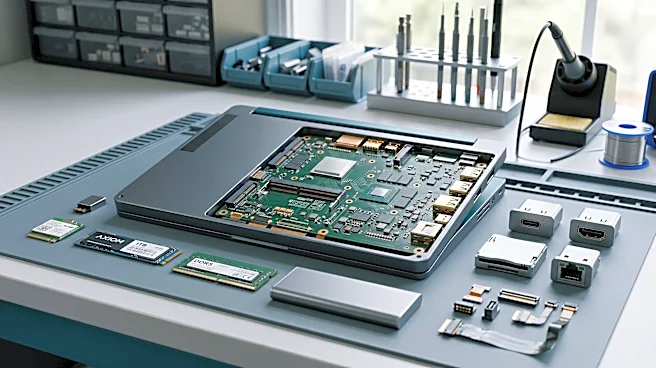
users are expressing concerns about the availability of parts needed for upgrades and repairs. While Framework sells Coolermaster cases designed to repurpose laptop motherboards after upgrades, some users report difficulties in actually fulfilling the modular reuse aspect. The company's accountability for supplying these crucial parts is being questioned, with a sentiment that the responsibility for ensuring the system works as advertised lies with the seller. This issue extends beyond just mainboards, RAM, and storage, which are now available through a batching process, to other components like chassis upgrades.
Why It's Important?
This situation is important because it highlights the challenges and responsibilities associated with promoting modular and repairable technology. Framework's initial marketing centered on maximizing reuse and offering an alternative to the less repairable designs prevalent in the industry. If the company struggles to provide the necessary components for upgrades and repairs, it undermines the very principle it was founded upon. This could impact consumer trust in companies advocating for repairability and sustainability. For the broader tech industry, it serves as a case study on the complexities of maintaining a robust supply chain for modular products and the importance of fulfilling promises related to product longevity and user-driven upgrades. The ability to upgrade and reuse components is a significant factor for consumers seeking more sustainable and cost-effective computing solutions.
What's Next?
Framework will likely need to address the concerns regarding parts availability and its modular promise to maintain its reputation and customer base. This could involve improving its supply chain for individual components, particularly for chassis and other upgrade parts, and enhancing communication with its customers about the timelines and processes for obtaining these items. The company may also need to clarify its long-term strategy for supporting older mainboards with newer chassis designs. The ongoing feedback from early adopters will be crucial in shaping Framework's future product development and customer service strategies. The market for portable Linux poweruser laptops, where Framework has a presence, continues to evolve, and meeting these expectations will be key to its continued success.
Beyond the Headlines
The challenges faced by Framework extend beyond mere logistics; they touch upon the ethical and environmental implications of product design and corporate responsibility. The 'right to repair' movement advocates for consumers' ability to fix and upgrade their devices, reducing electronic waste and promoting sustainability. Framework positioned itself as a leader in this movement. If the company cannot consistently provide the means for users to exercise this right, it could inadvertently fuel skepticism about the feasibility of truly modular and repairable electronics. This situation also underscores the broader tension between rapid technological advancement and the desire for product longevity, prompting questions about how manufacturers can balance innovation with sustainable practices and consumer expectations for long-term support.