




What's Happening?
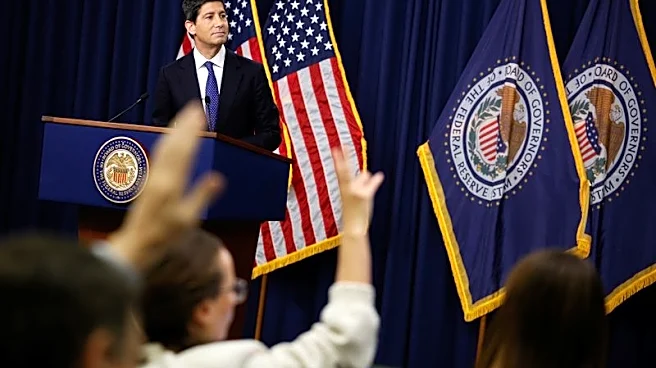
Federal Reserve Vice Chair for Supervision Bowman announced proposed revisions to the U.S. banking regulations and supervision, specifically focusing on enhancing the bank regulatory stress test framework. These changes aim to improve transparency, public
accountability, and the reliability of models used in stress tests, while also reducing the volatility of capital requirements. The proposed reforms include publishing detailed information on stress test models, including equations, variables, assumptions, and decision-making rationale. Additionally, the scenario design process will be made more transparent, with enhanced guides for variables like unemployment and housing prices, and new guides for other U.S. and international economic variables. A second final rule proposes averaging the results of a bank's two most recent annual stress tests to reduce volatility in the Stress Capital Buffer (SCB) requirement. Bowman also previewed an expanded approach for future stress testing, which would serve as a forward-looking supervisory tool to identify firm-specific vulnerabilities without directly affecting capital requirements.
Why It's Important?
These proposed enhancements to the stress testing framework are important because they aim to strengthen the resilience of the U.S. banking system and increase public confidence. By increasing transparency and public accountability, the reforms will allow investors, counterparties, and rating agencies to better assess a firm's risk profile, fostering greater market discipline. The reduction in SCB volatility will provide banks with more predictable capital requirements, enabling better capital planning and business decisions. The expanded approach to stress testing, focusing on identifying firm-specific vulnerabilities, could prevent future financial crises by allowing supervisors to proactively address risks before they escalate, as illustrated by the Silicon Valley Bank (SVB) experience. This proactive approach is crucial for maintaining financial stability and ensuring that large banks can continue lending to households and businesses even during severe economic stress.
What's Next?
In the coming weeks, the Federal Reserve Board will consider finalizing these revisions to the stress testing framework. Following finalization, detailed information on models and scenario design processes will be published, and the new method for calculating the SCB requirement will be implemented. The expanded approach to stress testing, which will serve as a forward-looking supervisory tool, will be further developed and integrated into the supervisory process. This will involve ongoing dialogue between firms and supervisors to understand firm-specific risks and potential spillovers to the broader financial system. The Federal Reserve will also continue to refine its models and scenarios based on public feedback and evolving economic conditions. The goal is to create a more robust, transparent, and effective framework for ensuring the safety and soundness of the U.S. banking sector.
Beyond the Headlines
Beyond the immediate regulatory changes, these reforms signify a fundamental shift in the Federal Reserve's approach to bank supervision, moving towards greater transparency and a more proactive identification of risks. The emphasis on learning from past failures, such as the SVB experience, highlights a commitment to continuous improvement in regulatory practices. This could lead to a more dynamic and adaptive regulatory environment that can better respond to emerging financial risks. The increased public disclosure of stress test methodologies could also foster greater public understanding and trust in the financial system, which is crucial for its long-term stability. Furthermore, by encouraging banks to conduct their own reverse stress testing and engage in open dialogue with supervisors, the framework aims to cultivate a culture of proactive risk management within financial institutions, ultimately contributing to a more resilient and stable U.S. economy.