



What's Happening?
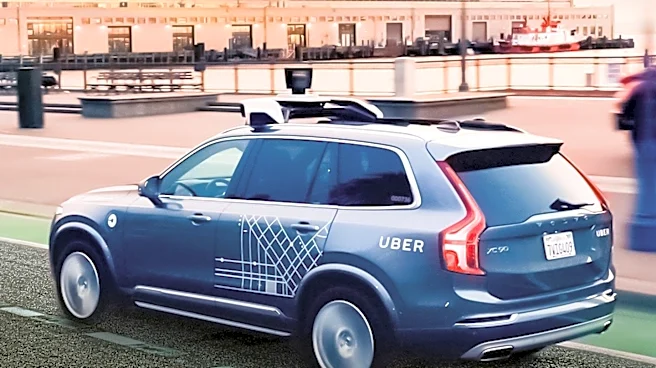
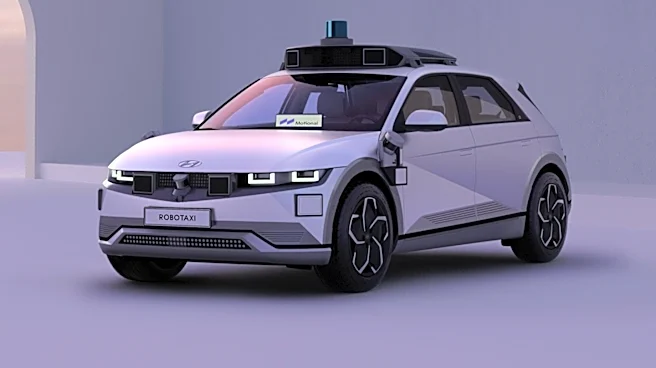
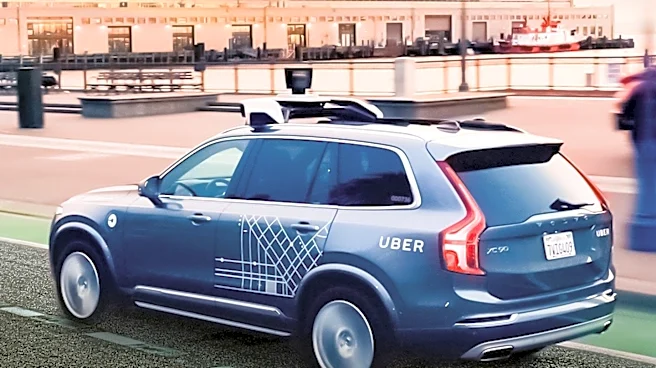
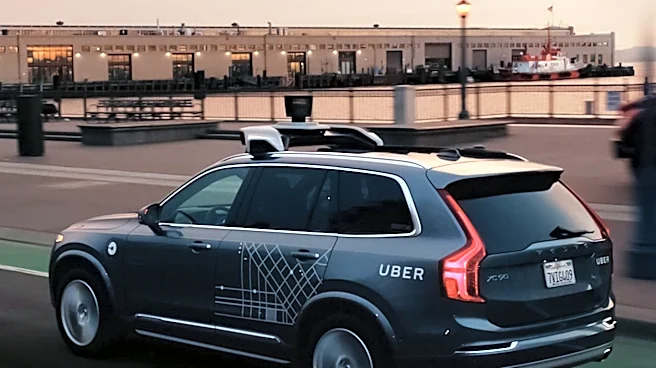
Uber has announced a $10 billion investment to expand its autonomous vehicle (AV) program, aiming to deploy 120,000 AVs across at least 15 cities by the end of the year and 28 by 2028. This initiative is part of Uber's strategy to position itself as a platform
connecting AV partners to riders, rather than developing its own self-driving system. Uber's CEO, Dara Khosrowshahi, highlighted the company's strong financial position, with $14.2 billion in revenue and a record $2.8 billion in free cash flow for the quarter. The investment comes as Uber's relationship with its original robotaxi partner, Waymo, deteriorates, with Waymo ending its Phoenix arrangement and planning to exit contracts in Austin and Atlanta.
Why It's Important?
Uber's significant investment in autonomous vehicles underscores its commitment to becoming a leader in the AV space, leveraging partnerships with companies like Rivian and Lucid. This strategic shift allows Uber to focus on its core strength as a platform, potentially reducing the risks associated with developing its own AV technology. The expansion of Uber's AV fleet could transform urban transportation, offering more efficient and cost-effective ride-hailing options. However, the fraying relationship with Waymo highlights the competitive and complex nature of the AV industry, where partnerships and technological advancements are crucial for success. Uber's ability to navigate these challenges will be critical in maintaining its market position and achieving its long-term goals.
What's Next?
Uber plans to continue expanding its AV partnerships and fleet, with a focus on integrating these vehicles into its existing ride-hailing platform. The company will need to address regulatory and safety concerns as it scales its AV operations. Additionally, Uber's strategic decisions regarding its partnerships and technology investments will be closely watched by industry stakeholders. The outcome of Uber's AV expansion could influence the broader transportation landscape, potentially setting new standards for ride-hailing services and urban mobility.