






What's Happening?
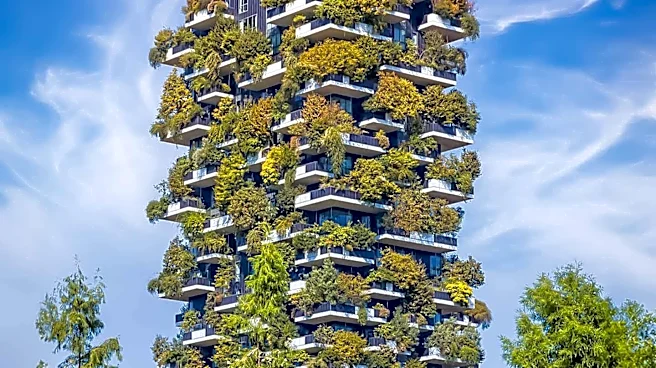
Vertical gardens are gaining recognition as an innovative solution for optimizing space in compact urban environments. These living installations, also known as living walls, allow individuals with limited outdoor access to cultivate lush indoor environments. Beyond
their aesthetic appeal, vertical gardens provide thermal insulation, helping to regulate indoor temperatures. They also contribute to improved air quality by naturally filtering toxins and pollutants, making the air fresher for occupants. The versatility of plant species used in these gardens offers extensive design possibilities, allowing for personal expression and the creation of calming atmospheres in homes and workplaces. Some vertical gardens are designed to be free-standing and mobile, offering flexibility in placement both indoors and outdoors, and can serve as room dividers or focal points.
Why It's Important?
The increasing adoption of vertical gardens holds significant importance for urban planning and public health in the U.S. As urban areas become denser, these gardens offer a practical way to integrate nature into built environments, addressing the challenge of limited green space. Their ability to improve indoor air quality by filtering pollutants can lead to healthier living and working conditions, potentially reducing respiratory issues and enhancing overall well-being for urban dwellers. The thermal insulation properties of vertical gardens can contribute to energy efficiency in buildings, lowering heating and cooling costs for businesses and residents. Furthermore, by fostering biodiversity and reducing urban heat, these installations align with broader sustainability goals, offering an eco-friendly design element that supports environmental resilience in cities across the nation.
What's Next?
The trend of incorporating vertical gardens is expected to continue growing, with potential advancements in their design and functionality. Future developments may include more sophisticated automated irrigation systems and a wider selection of plant species specifically cultivated for vertical growth, ensuring long-term viability and reduced maintenance. As awareness of environmental benefits increases, more businesses and residential developers are likely to integrate vertical gardens into their projects, potentially leading to new regulations or incentives for green building practices. The flexibility of free-standing and mobile vertical gardens suggests an expansion into temporary installations for events, exhibitions, and pop-up spaces, further democratizing access to green elements in urban settings. Research into the psychological benefits of indoor greenery may also drive increased adoption in workplaces and healthcare facilities.
Beyond the Headlines
Beyond their immediate aesthetic and environmental benefits, vertical gardens represent a deeper shift in how urban spaces are conceived and utilized. They challenge traditional notions of gardening and green space, demonstrating that nature can be integrated vertically rather than solely horizontally. This re-imagining of space has ethical implications, promoting a more harmonious relationship between urban living and the natural world. Culturally, the rise of vertical gardens reflects a growing societal value placed on sustainability, well-being, and biophilic design—the human tendency to connect with nature. Long-term, widespread adoption could lead to a redefinition of urban aesthetics, where living walls become as common as traditional landscaping, fostering a greener, more breathable, and visually engaging urban fabric. This could also spur innovation in related fields, such as sustainable architecture and urban agriculture.