




What's Happening?
Western Midstream Partners, LP (WES) has announced that it will make available a post-earnings interview with Kristen Shults, Senior Vice President and Chief Financial Officer, on its website before the market opens tomorrow. This interview will provide
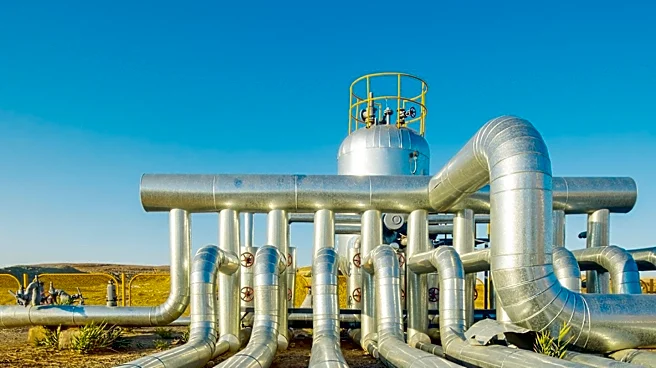
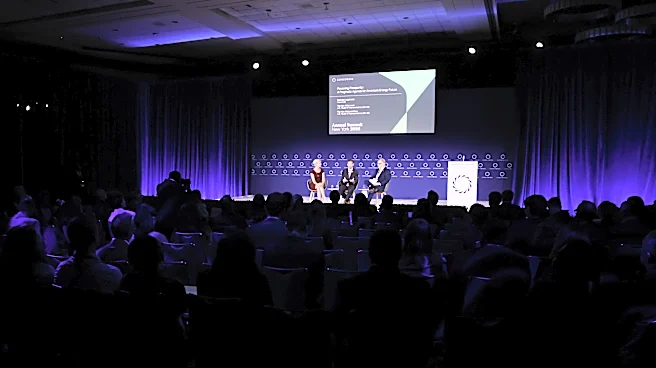
additional insights into WES's third-quarter 2026 results. The company also plans to participate in several investor conferences during the fourth quarter of 2026 and the first quarter of 2027. These include the Mizuho, Power, Energy, and Infrastructure Conference 2026 in New York, the Wells Fargo 2026 25th Annual Energy & Power Symposium in New York, the Institute for Private Investors End of Year Forum in Austin, Texas, and the 2027 UBS Global Energy & Utilities Winter Conference in Park City, Utah. WES, a master limited partnership, develops, acquires, owns, and operates midstream assets across Texas, New Mexico, Colorado, Utah, and Wyoming, focusing on gathering, compressing, treating, processing, and transporting natural gas, as well as handling condensate, natural-gas liquids, and crude oil. A significant portion of WES's cash flows are protected from commodity price volatility through fee-based contracts.
Why It's Important?
Western Midstream's announcement of its third-quarter earnings interview and participation in upcoming investor conferences is important for the U.S. energy sector and financial markets. As a major midstream operator, WES plays a critical role in the transportation and processing of natural gas, crude oil, and other hydrocarbons from key U.S. production basins. The stability of its cash flows, largely protected by fee-based contracts, provides a degree of resilience against commodity price fluctuations, which is attractive to investors seeking stable returns in the often-volatile energy market. The insights from CFO Kristen Shults will offer transparency into the company's financial health and operational strategies, influencing investor confidence and potential capital allocation. Furthermore, WES's presence at prominent investor conferences indicates its commitment to engaging with the financial community, potentially attracting new investments and reinforcing its market position. This activity underscores the ongoing importance of midstream infrastructure for the efficient functioning of the U.S. energy supply chain.
What's Next?
Investors and analysts will be closely watching for the release of Kristen Shults's post-earnings interview for a deeper understanding of Western Midstream's third-quarter performance and future outlook. The company's participation in multiple investor conferences over the coming months will provide further opportunities for engagement with the financial community, potentially leading to updated analyst ratings and investment decisions. These events are crucial for WES to communicate its strategic direction, capital expenditure plans, and any adjustments to its operational footprint across its diverse asset base in the Western U.S. The focus on fee-based contracts suggests a continued emphasis on stable revenue streams, which will be a key point of interest for stakeholders evaluating the company's long-term financial health and growth prospects in the evolving energy landscape.
Beyond the Headlines
The midstream sector, represented by companies like Western Midstream, often operates as the backbone of the U.S. energy industry, connecting production sites to processing facilities and end-users. While less visible than exploration and production, its stability, particularly through fee-based contracts, is crucial for the entire energy value chain. This business model insulates midstream companies from direct commodity price volatility, offering a more predictable financial profile. However, the long-term implications involve the ongoing debate about fossil fuel infrastructure in the context of climate change. As the U.S. and global economies consider transitions to cleaner energy, the future demand for midstream services for oil and gas could face scrutiny. This raises questions about the adaptability of these companies, their potential role in transporting alternative fuels, and the ethical considerations of continued investment in fossil fuel infrastructure amidst environmental concerns.