



What's Happening?
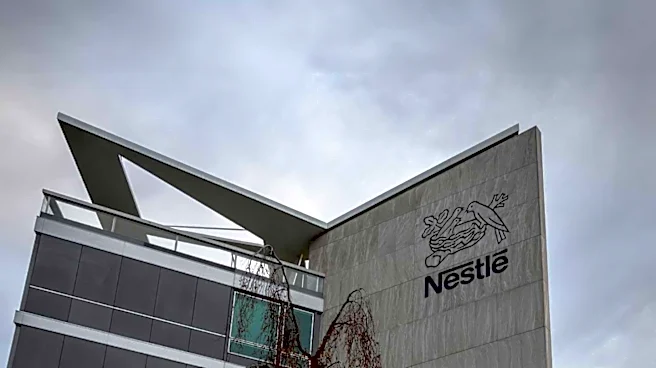
Nestlé, the Swiss food giant, is at risk of losing control over a portion of its Russian operations. A local logistics company, KS Logistika, has reportedly requested President Vladimir Putin to place five of Nestlé's Russian subsidiaries under temporary
state administration. This move, if approved, could be a precursor to a change of ownership. KS Logistika justifies its request by claiming that Nestlé is not expanding its production capacity and has ceased exporting goods manufactured in Russia. Nestlé, which generates approximately 2% of its global turnover in Russia, maintains that its factories and offices are operating normally and that it is fulfilling its obligations, with no plans for a complete withdrawal from the country. This development follows a trend where Russia has tightened regulations on foreign companies, with other Western firms like Danone and Carlsberg having already lost control of their Russian businesses.
Why It's Important?
This situation highlights the increasing risks and complexities faced by U.S. and other Western companies that have maintained operations in Russia since the 2022 invasion of Ukraine. The potential state administration and subsequent change of ownership for Nestlé's subsidiaries could result in significant financial losses, as seen with Danone and Carlsberg, which incurred substantial write-downs. This trend creates an unpredictable and hostile business environment, deterring future foreign investment and potentially forcing more companies to reconsider their presence in Russia. For the U.S. economy, such actions by Russia contribute to global economic instability and underscore the challenges of navigating international sanctions and geopolitical tensions, impacting supply chains and corporate strategies for multinational corporations.
What's Next?
The Russian government is expected to examine KS Logistika's request by the end of the year. Nestlé has stated it has not yet been contacted by authorities regarding the matter, but the company's shares have already reacted negatively to the news. Analysts at JPMorgan suggest that if Nestlé is forced to sell its Russian business with little proceeds, it could reduce earnings per share by 3-4%. This development is also likely to intensify pressure on Nestlé to fully withdraw from Russia, a decision many other companies have already made. The outcome of this request will set a precedent for other foreign companies still operating in Russia, potentially leading to a wave of similar actions and further consolidation of foreign assets under state control or local ownership.
Beyond the Headlines
The actions taken by the Russian government against foreign companies like Nestlé reflect a broader strategy of economic nationalism and retaliation against Western sanctions. By seizing or forcing the sale of foreign assets, Russia aims to assert greater control over its economy, reduce reliance on foreign entities, and potentially punish countries perceived as hostile. This approach has significant ethical and legal implications, raising questions about property rights, international business law, and the role of corporations in geopolitical conflicts. The dilemma faced by companies like Nestlé—balancing humanitarian concerns (supplying essential goods) with economic and political pressures—underscores the complex moral landscape of operating in conflict zones. This trend could lead to a more fragmented global economy, where companies are increasingly forced to choose sides and navigate divergent regulatory and political environments.