





What's Happening?
Holiday Inn by IHG has announced the opening of its Holiday Inn & Suites Commerce City-Denver Airport property in Commerce City, Colorado. This new hotel is the first to feature Holiday Inn's latest lobby design concept, which integrates the front desk,
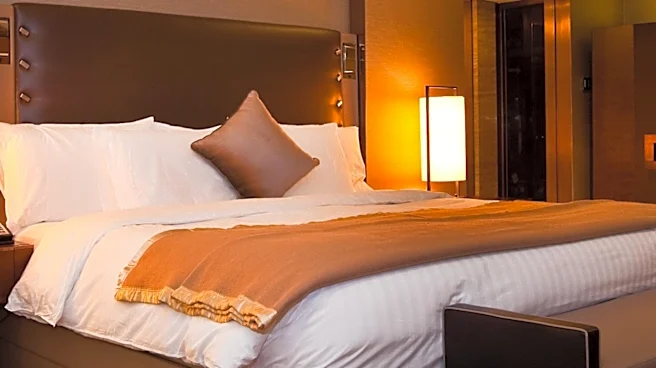
an order counter, and a bar into a single, centralized hub. The aim of this new design is to create a more seamless and connected guest experience. Developed by NibbleNook Hospitality, the pet-friendly hotel offers 106 rooms and is conveniently located less than 10 minutes from Denver International Airport, providing a complimentary airport shuttle service. The property also includes versatile multi-purpose spaces for gatherings, adaptable meeting spaces for business travelers, and an outdoor patio with a fire pit. Guestrooms are designed with distinct zones for work, relaxation, and sleep, featuring dedicated workspaces and lounge areas. Additional amenities include an indoor heated pool, complimentary WiFi, a 24-hour fitness center, and electric vehicle charging stations. The hotel's dining options include a breakfast buffet, dinner at the Mile High Landing restaurant, and a full-service bar offering classic American cuisine and handcrafted beverages.
Why It's Important?
The introduction of Holiday Inn's new lobby design concept signifies a strategic evolution in the hospitality industry's approach to guest experience. By co-locating the front desk, order counter, and bar, Holiday Inn aims to enhance efficiency and foster a more social and integrated environment for travelers. This move reflects a broader trend in hotel design to create more communal and flexible spaces that cater to both leisure and business guests. For the U.S. hotel market, this design innovation could set a new standard for mid-range hotels, influencing future property developments and renovations. The focus on modern amenities, pet-friendliness, and proximity to key transportation hubs like Denver International Airport positions the Commerce City location to attract a diverse clientele, including corporate travelers, families, and those attending local youth sports events. This investment in guest-centric design and comprehensive services is crucial for maintaining competitiveness in a dynamic market, potentially driving higher occupancy rates and guest satisfaction for Holiday Inn properties adopting this new prototype.
What's Next?
Following the debut of this new lobby design in Commerce City, Holiday Inn by IHG is likely to monitor its reception and operational efficiency closely. If successful, this prototype could be rolled out to other new Holiday Inn properties and potentially integrated into renovations of existing hotels across the U.S. and globally. This would represent a significant brand refresh, impacting the guest experience for millions of travelers. Other hotel chains may observe Holiday Inn's strategy and consider similar integrated lobby concepts to enhance their own offerings and appeal to evolving consumer preferences for more connected and versatile hotel spaces. The success of this model could also influence architectural and interior design trends within the hospitality sector, emphasizing multi-functional areas and technology-driven guest services. Furthermore, the property's strategic location near a major airport and local attractions suggests a focus on capturing both transient and destination-based travelers, indicating a potential blueprint for future Holiday Inn developments in similar high-traffic areas.
Beyond the Headlines
The new lobby design by Holiday Inn by IHG reflects a deeper shift in consumer expectations within the hospitality sector, moving beyond mere accommodation to a desire for integrated experiences. This trend highlights the increasing importance of communal spaces that facilitate social interaction and offer diverse services in one central location. The emphasis on a 'seamless and connected guest experience' speaks to the digital age, where convenience and efficiency are paramount. Ethically, this design could foster a greater sense of community among travelers, potentially reducing feelings of isolation often associated with hotel stays. Culturally, it signifies a blending of traditional hotel functions with modern social hubs, transforming lobbies from transactional spaces into vibrant gathering points. This evolution could also impact local economies by encouraging guests to spend more time and money within the hotel, supporting on-site food and beverage operations. The long-term implication is a potential redefinition of the hotel lobby's role, making it a key differentiator and a central element of a brand's identity, rather than just an entry point.