







What's Happening?
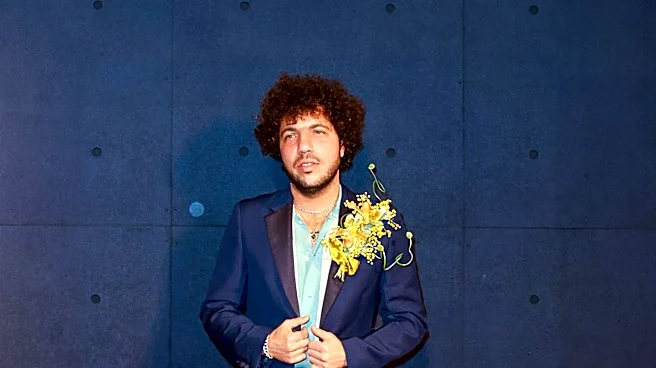
A book by Benny Blanco, focusing on the concept of failure, has been highlighted for its message that embracing setbacks is crucial for success. The book, whose title emphasizes the importance of 'failing better,' suggests that success is often a result
of learning from failures. This perspective is particularly resonant for entrepreneurs and athletes who frequently encounter obstacles. The author of a LinkedIn post, Nicole Brennan, shared her personal connection to the book's theme, noting that as a 'recovering perfectionist' and an entrepreneur-para-athlete, she has found failure to be an inevitable part of striving for goals. She reflects on the daily challenges and triumphs in her own ventures, such as LimbMatch, and in her athletic training, where both success and rejection can occur on the same day. The book's core message encourages individuals to accept the sting of failure, learn from it, and then persevere.
Why It's Important?
This narrative is significant for the U.S. entrepreneurial landscape and broader societal attitudes towards achievement. In a culture that often glorifies immediate success, Blanco's book offers a counter-narrative that normalizes and even valorizes failure as a stepping stone. For aspiring business owners and innovators, this perspective can reduce the fear of taking risks, which is essential for economic growth and innovation. By reframing failure as a learning opportunity rather than a definitive end, the book could foster greater resilience and a more experimental approach in various fields. This shift in mindset can lead to more robust problem-solving and sustained effort, ultimately contributing to more successful ventures and personal development across the nation. It also aligns with psychological principles that emphasize growth mindset over fixed mindset, promoting continuous improvement.
What's Next?
The discussion around Benny Blanco's book on failure is likely to continue influencing conversations about resilience and success in professional and personal development circles. As more individuals, particularly those in entrepreneurial roles or competitive fields, engage with its themes, there could be a broader cultural shift towards a more accepting view of setbacks. This might lead to increased adoption of 'fail fast, learn faster' methodologies in startups and corporate innovation labs. Educational institutions and mentorship programs might also integrate these principles, encouraging students and mentees to view challenges as integral parts of their learning journey. The book's message could also inspire further dialogue on mental health in high-pressure environments, promoting healthier coping mechanisms for dealing with professional disappointments.
Beyond the Headlines
Beyond its immediate message, Blanco's book touches upon deeper ethical and cultural implications regarding the pursuit of perfection. In a society often driven by social media portrayals of flawless success, the book challenges individuals to embrace vulnerability and imperfection. This can have profound effects on mental well-being, reducing the pressure to maintain an unattainable image and fostering more authentic self-acceptance. Legally, while not directly addressed, a culture that encourages learning from failure might indirectly influence how business failures are perceived and regulated, potentially leading to more supportive frameworks for entrepreneurs who experience setbacks. Culturally, it contributes to a growing movement that values process and learning over just outcomes, potentially shifting societal metrics of success to include resilience and adaptability as key virtues.