




What's Happening?
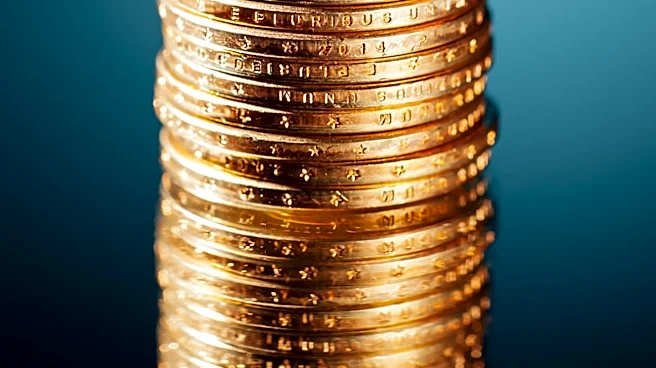
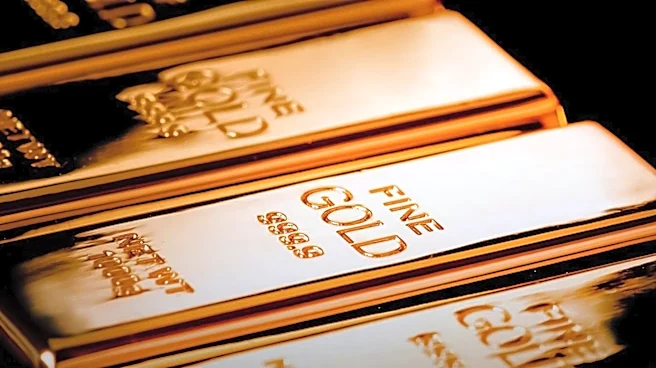
Wells Fargo, alongside other major investment banks including Morgan Stanley, Goldman Sachs, and UBS, has updated its long-term price forecast for gold, predicting a potential rise to $5,600 per ounce by 2027. This projection is influenced by anticipated
Federal Reserve interest rate policies, continued physical gold purchases by central banks, and broader macroeconomic risks. Wells Fargo Investment Institute specifically revised its 2026 year-end gold price target to between $4,900 and $5,100 per ounce, and its 2027 target range to $5,400 to $5,600. This adjustment reflects expectations of 25 basis point interest rate increases from the Federal Reserve in both 2026 and 2027. Despite these anticipated rate hikes, Wells Fargo maintains its view that gold's long-term upward trend will persist. The current market sees gold completing the week at $4,604 per ounce, with analysts viewing short-term pullbacks as buying opportunities.
Why It's Important?
This forecast from Wells Fargo and other leading financial institutions carries significant weight for U.S. investors, financial markets, and the broader economy. A sustained increase in gold prices to $5,600 per ounce by 2027 could signal growing investor concern over inflation, geopolitical instability, and the long-term value of fiat currencies, particularly the U.S. dollar. For individual investors, gold often serves as a safe-haven asset, and a rising price could attract more capital into precious metals, potentially diverting funds from other asset classes like stocks or bonds. For the U.S. economy, a strong gold market might reflect underlying anxieties about economic growth or the effectiveness of monetary policy. Furthermore, the anticipated Federal Reserve interest rate adjustments are a critical factor, as higher rates typically make non-yielding assets like gold less attractive. However, the banks' continued bullish outlook suggests that other factors, such as central bank demand and macroeconomic risks, are expected to outweigh the impact of modest rate increases, indicating a complex interplay of forces shaping future economic sentiment.
What's Next?
Investors and market observers will closely monitor upcoming Federal Reserve announcements regarding interest rate policies, as these will be crucial in validating or challenging the current gold price forecasts. The actions of global central banks, particularly their continued accumulation of gold reserves, will also be a key indicator. Any shifts in macroeconomic risk perceptions, such as changes in inflation outlooks or geopolitical tensions, could further influence gold's trajectory. Market volatility is anticipated, with analysts warning that while upward movements could be self-feeding, potential pullbacks could also accelerate selling pressure. Therefore, market participants will be watching for signs of sustained demand from both institutional and retail investors, as well as any unexpected policy shifts from major economic powers that could impact the U.S. dollar's strength and, consequently, gold's appeal.
Beyond the Headlines
The long-term bullish outlook on gold, despite anticipated Federal Reserve rate hikes, suggests a deeper narrative about the evolving global financial landscape. It highlights a potential shift in investor confidence towards tangible assets as a hedge against systemic risks and currency devaluation. This trend could have profound implications for the U.S. financial system, potentially leading to a re-evaluation of traditional investment portfolios and a greater emphasis on diversification beyond conventional equities and bonds. The sustained demand from central banks, particularly from emerging economies, also points to a broader de-dollarization trend and a desire to reduce reliance on the U.S. dollar as the primary reserve currency. This could subtly undermine the U.S.'s financial hegemony over time, influencing trade relationships and international financial flows. The ethical dimension also comes into play, as increased gold mining could raise environmental concerns, while the metal's role as a safe haven during crises often benefits those with access to capital, potentially exacerbating wealth disparities.