






What's Happening?
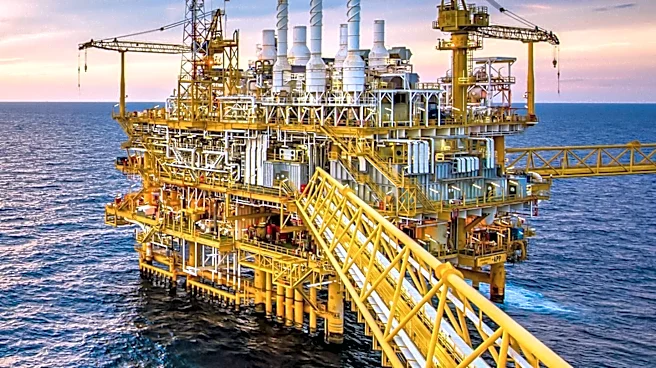
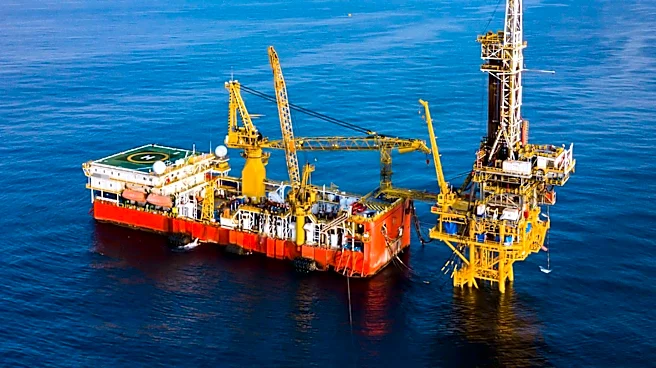
Egypt's Ministry of Petroleum and Mineral Resources announced a new natural gas discovery in the Mediterranean Sea. The discovery, located in the Taiba concession area, is estimated to hold approximately 200 billion cubic feet in the reservoir of the exploratory
well "Nasim-1X." Drilling and appraisal work revealed a gas-bearing layer with a net thickness of about 15 meters, characterized by distinct geological and petrophysical properties. Technical and reservoir studies are currently underway to determine the exact producible volumes, assess potential daily production rates, and evaluate the commercial viability of the discovery. The ministry has not yet announced a start date for production.
Why It's Important?
This new gas discovery is crucial for Egypt's energy independence and economic stability. Cairo aims for the discovery to bolster domestic gas production and reduce its reliance on imports, which has increased in recent years due to declining output. Strengthening local supplies is vital for meeting the strong gas demand from the electricity and industrial sectors within Egypt. The development of new discoveries and accelerated exploration efforts are key components of Egypt's strategy to enhance its energy security. The success of this project could also attract further foreign investment into Egypt's energy sector, signaling an improved investment climate and progress in settling overdue financial receivables owed to international companies.
What's Next?
Egypt plans to expedite the utilization of this discovery by connecting the "Nasim-1X" well to existing production facilities. This will be achieved through a pipeline approximately 22 kilometers long, linking it to the Abu Madi - El Gamil pipeline. This approach aims to leverage existing infrastructure and shorten the timeline for initiating production. Italian company Eni operates the Taiba concession in partnership with Australian company Woodside, with Egyptian firm Petrobel conducting the drilling. The ongoing technical and reservoir studies will be critical in determining the next steps, including the final investment decision and the timeline for bringing the field online.
Beyond the Headlines
The discovery of the "Nasim-1X" gas field has broader implications for regional energy dynamics. As Egypt seeks to become a regional energy hub, increased domestic production strengthens its position as a reliable supplier. This could potentially lead to new export opportunities and enhance energy cooperation with neighboring countries and Europe. The focus on leveraging existing infrastructure for rapid integration highlights a strategic approach to maximizing the economic benefits of new finds. Furthermore, the success of this project could encourage more exploration activities in the Mediterranean, a region increasingly recognized for its significant natural gas reserves, potentially reshaping energy geopolitics in the Eastern Mediterranean.