





What's Happening?
S&P Global Ratings has lowered Meta Platforms Inc.'s credit outlook from stable to negative, citing concerns over the company's substantial artificial intelligence expenditure. S&P noted that Meta's multi-year AI goals make it unlikely for the company to cut
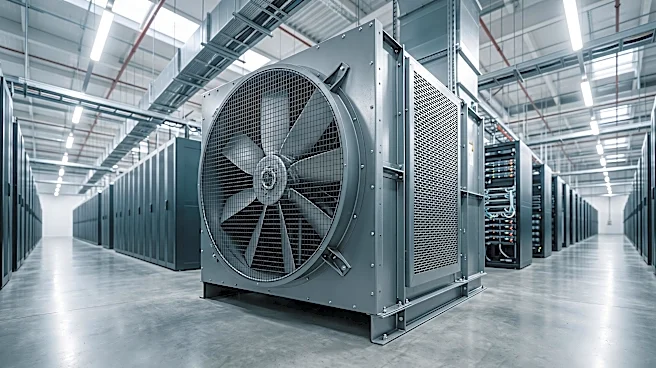
capital expenditures as previously planned. Meta reported a $2.12 billion free cash flow loss in the third quarter and expects to invest between $135 billion and $145 billion in capital expenditures for the year. S&P estimates that Meta will face free operational cash flow shortfalls of approximately $39 billion in 2026 and $71 billion in 2027. The ratings agency also warned that Meta's leverage could exceed 1.0x if high spending continues and AI monetization takes longer than anticipated. This increase in debt is primarily attributed to Meta's use of leased data-center capacity.
Why It's Important?
S&P Global Ratings' negative outlook on Meta signals growing concerns within the financial markets regarding the sustainability and profitability of the company's aggressive AI investments. While Meta's AI push is aimed at long-term growth and innovation, the immediate financial implications, such as negative free cash flow and rising leverage, are raising red flags for credit agencies. This shift from a stable to a negative outlook could impact Meta's borrowing costs and investor confidence, as it suggests a higher risk profile. The market is seeking clearer visibility into how and when these massive AI expenditures will translate into tangible financial returns. For the broader technology sector, this highlights the challenge of balancing ambitious AI development with financial prudence, as other hyperscalers are also experiencing cash deficits due to similar investments.
What's Next?
S&P indicated that the outlook could revert to stable if Meta manages to keep its adjusted leverage below its downgrade level and achieves positive free operational cash flow by 2028. This could be accomplished through reduced spending, more effective AI monetization, or alternative non-debt financing methods. Investors will be closely monitoring Meta's future capital expenditure projections and evidence of its AI investments generating significant cash returns. The company's ability to demonstrate a clear path to profitability from its AI initiatives will be crucial for regaining a stable credit outlook and reassuring the market. The ongoing debate about the sustainability of the AI spending boom will continue to influence market sentiment and corporate strategies across the tech industry.
Beyond the Headlines
The S&P's negative outlook on Meta underscores a critical tension in the current technology landscape: the immense potential of AI versus the significant financial outlay required to realize it. This situation prompts a deeper examination of how companies finance large-scale, long-term technological bets and the metrics by which their success is judged. It also highlights the increasing importance of transparent communication from tech giants about their AI monetization strategies. The reliance on leased data-center capacity, contributing to increased debt, points to evolving financial models in the cloud and AI infrastructure space. Ultimately, this development could influence how other companies approach their own AI investments, potentially leading to more cautious spending or innovative financing solutions to mitigate credit risks.