
What's Happening?
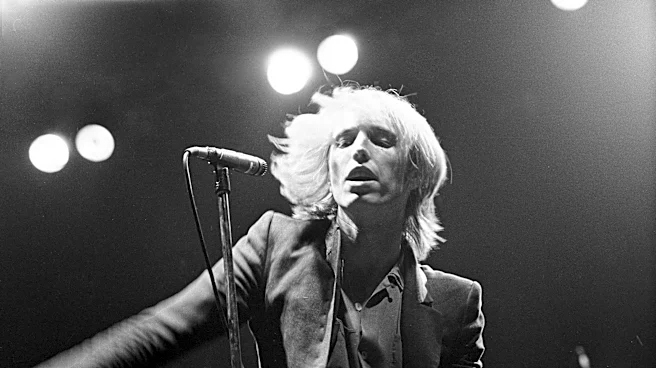
Tom Petty, the American singer, songwriter, and guitarist, often cited The Guess Who, a Canadian hard-rock band from the late 1960s, as an overlooked influence that deserved more recognition. Despite their
commercial success, including the 1970 number-one single 'American Woman,' Petty felt they never received the 'cool' label afforded to other bands of their era. Petty, whose own musical journey was significantly shaped by acts like The Beatles, maintained an expansive music taste cultivated through college radio and a deep interest in rock beyond mainstream charts. He noted that during the late sixties, bands with hit singles sometimes suffered a credibility loss, a fate he believed affected The Guess Who. Petty praised the band's lead singer, Burton Cummings, and guitarist, Randy Bachman, and would occasionally listen to their tracks, acknowledging their significant contributions to music.
Why It's Important?
This insight into Tom Petty's musical influences highlights the subjective nature of critical acclaim versus commercial success in the music industry. Petty's perspective underscores how certain artists, despite producing popular and influential work, might be marginalized in historical narratives or critical discourse. For music historians and fans, this revelation enriches the understanding of Petty's artistic development and the broader landscape of 1960s and 70s rock music. It also brings renewed attention to The Guess Who, potentially sparking interest in their catalog among new generations of listeners and re-evaluating their place in rock history. This re-evaluation can impact the legacy and recognition of other artists who, like The Guess Who, may have been commercially successful but critically undervalued.
What's Next?
The renewed attention to The Guess Who, spurred by Tom Petty's endorsement, could lead to a re-examination of their discography and influence within music circles. This might manifest in increased streaming numbers, renewed critical analyses, or even tribute performances. For fans of Tom Petty, this information offers a deeper understanding of the artists who shaped his unique sound and songwriting style. It could also encourage further exploration into the lesser-known influences of other celebrated musicians, fostering a more comprehensive appreciation of music history beyond the most iconic figures. The ongoing discussion about 'overlooked' bands serves to continually reshape and expand the canon of popular music.
Beyond the Headlines
Petty's observation about the 'credibility suffered' by bands with hit singles in the late sixties touches on a deeper cultural phenomenon within music: the tension between artistic integrity and commercial appeal. This dynamic often leads to a bifurcation where critically acclaimed artists might not achieve widespread popularity, and vice versa. Petty's advocacy for The Guess Who challenges this dichotomy, suggesting that commercial success does not inherently diminish artistic merit. This perspective encourages a more holistic view of musical contributions, urging listeners and critics to look beyond superficial labels and appreciate the craftsmanship and impact of all artists, regardless of their 'cool' factor. It also highlights the role of influential artists like Petty in shaping public perception and preserving the legacies of their peers.