



What's Happening?
Wawa is expanding its electric vehicle (EV) charging infrastructure in Pennsylvania through a new partnership with Electrify America. The convenience store chain plans to install Wawa-branded charging stations at eight locations across the state. This
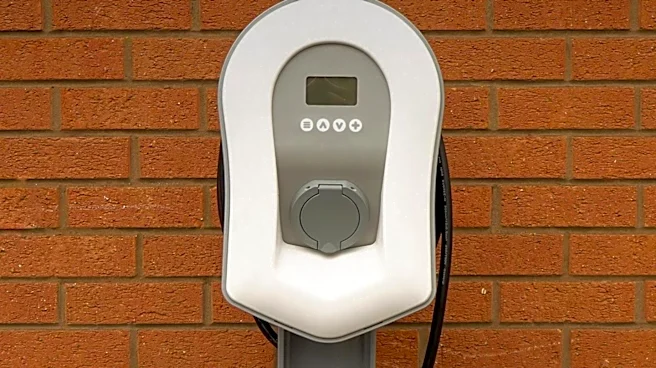
initiative marks a shift for Wawa from primarily hosting third-party chargers to owning its charging equipment. The new stations will feature a mix of 400-kW units with CCS1 and NACS (SAE J3400) connectors at five locations (Upper Darby, Phoenixville, Media, Williamsport, and Reading), and 350-kW CCS1 chargers at the remaining three locations (Bristol, Allentown, and Quakertown). The 400-kW chargers are expected to be Alpitronic HYC400 units, while the 350-kW chargers are likely Electrify America’s Hyperchargers. This move by Wawa demonstrates its commitment to meeting the evolving fueling needs of its customers, including those with electric vehicles. The company has been a leader in providing EV charging solutions since 2017, with over 280 locations currently offering this service out of approximately 1,200 total locations.
Why It's Important?
This expansion is significant for the U.S. EV charging landscape, particularly in the Mid-Atlantic region. By increasing the availability of high-speed charging options, Wawa and Electrify America are addressing a critical barrier to EV adoption: range anxiety and charging accessibility. The inclusion of both CCS1 and NACS connectors in the 400-kW units ensures broad compatibility with a wide range of EV models, catering to a larger customer base. Wawa's transition to owning its branded chargers could set a precedent for other convenience store chains, potentially leading to a more standardized and reliable charging experience for consumers. This partnership also highlights the growing competition and collaboration within the EV charging industry, as Electrify America secured this deal over other providers like Tesla's Supercharger for Business program. The increased charging infrastructure at easily accessible locations like Wawa stores will make EV ownership more practical and appealing for many Americans, contributing to the broader national goal of sustainable transportation.
What's Next?
Wawa's immediate next steps involve the installation and activation of these eight new charging stations in Pennsylvania. Following this initial deployment, the company will likely monitor the performance and customer reception of these Wawa-branded chargers. This pilot program could inform future expansion strategies, potentially leading to more Wawa-owned and branded charging stations across its 14-state footprint. Other convenience store chains and retail businesses will be closely observing Wawa's success in this venture, which could spur similar partnerships and investments in EV charging infrastructure nationwide. The ongoing competition between charging network providers like Electrify America and Tesla will continue to drive innovation and expansion in the sector, ultimately benefiting EV owners with more choices and improved services. Consumers can anticipate a growing number of convenient and reliable fast-charging options as these partnerships mature and expand.
Beyond the Headlines
This development reflects a broader trend in the U.S. where traditional fuel retailers are adapting to the shift towards electric vehicles. By integrating EV charging into their existing business model, Wawa is not only diversifying its services but also positioning itself as a key player in the future of transportation. The strategic decision to own and brand their chargers, rather than just host them, indicates a deeper commitment to the EV ecosystem and an effort to control the customer experience. This could lead to increased brand loyalty among EV drivers who value convenience and reliability. Furthermore, the partnership between a major convenience store chain and a prominent charging network like Electrify America underscores the necessity of cross-industry collaboration to build a robust national charging infrastructure. This move also has environmental implications, as a more accessible charging network can accelerate the transition away from fossil fuels, contributing to reduced carbon emissions and improved air quality in urban and suburban areas.