





What's Happening?
Michael Burry, known as 'The Big Short' investor, has reiterated his warnings about the artificial intelligence (AI) boom, highlighting that nine major technology companies have accumulated approximately $3 trillion in off-balance-sheet commitments for
AI infrastructure. This figure includes $1.2 trillion in unstarted leases and $1.9 trillion in purchase commitments for items like chips, energy, and data-center infrastructure. These obligations are disclosed in financial footnotes but are not yet recognized as liabilities on corporate balance sheets. Burry argues that hyperscalers are using overly long depreciation schedules for rapidly aging AI chips and servers, potentially understating depreciation expenses by $176 billion between 2026 and 2028. He also warns of a 'three-way compression' where AI demand weakens, corporate earnings fall as expenses catch up, and financing tightens, exacerbated by circular financing among hyperscalers, AI labs, and chipmakers that could artificially inflate demand and revenue.
Why It's Important?
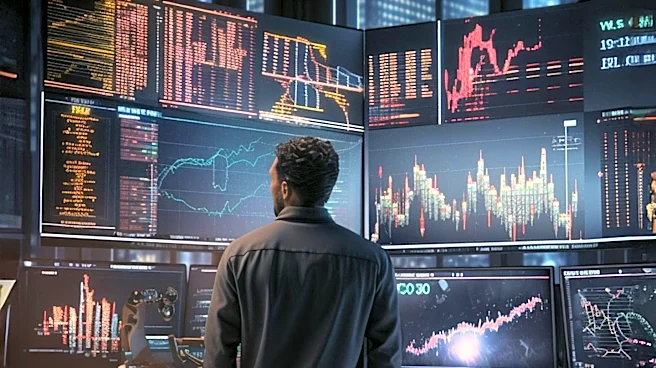
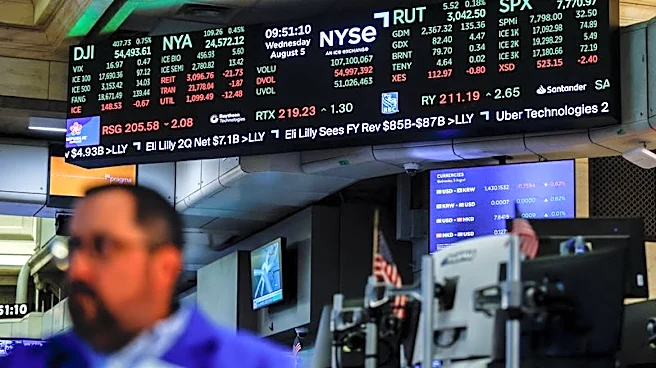
Burry's analysis points to a significant financial risk within the U.S. technology sector, particularly for companies heavily investing in AI. The $3 trillion in off-balance-sheet commitments represents a massive potential liability that could impact the financial stability and earnings of these tech giants if AI demand does not meet expectations. The alleged practice of extending depreciation schedules for AI hardware could artificially inflate reported earnings, misleading investors and creating a false sense of profitability. A 'three-way compression' scenario could trigger a substantial market correction, affecting stock market graphs, economic indicators, and the broader financial district skyline. This could lead to significant losses for investors and potentially slow down the rapid expansion of AI development if financing becomes more expensive or demand falters. The interconnectedness of these companies through circular financing also suggests a systemic risk that could amplify any downturn.
What's Next?
Investors and financial analysts will likely scrutinize the financial disclosures of major tech companies more closely, particularly their off-balance-sheet commitments and depreciation practices related to AI infrastructure. Regulatory bodies may also take an interest in these accounting methods to ensure transparency and prevent potential market distortions. If Burry's predictions materialize, there could be a re-evaluation of AI investments across the industry, potentially leading to a slowdown in the pace of AI development and deployment. Companies might be forced to adjust their depreciation schedules, which would impact their reported earnings and stock valuations. The market will be watching for any signs of weakening AI demand or tightening financing conditions, which could trigger the 'compression' scenario Burry describes. This could lead to increased volatility in the tech sector and broader stock market graphs.
Beyond the Headlines
Burry's warnings highlight a deeper concern about the sustainability and transparency of the current AI boom. The rapid pace of technological advancement in AI means that hardware can become obsolete quickly, making traditional depreciation schedules potentially inappropriate. This raises ethical questions about corporate accounting practices and the potential for companies to obscure financial risks. The concept of 'circular financing' also points to a potential bubble-like dynamic, where money flows within a closed ecosystem, creating an illusion of robust demand and revenue. If this is indeed the case, the eventual correction could have far-reaching consequences beyond just the tech sector, potentially impacting venture capital, employment in AI-related fields, and public trust in technological innovation. It underscores the need for rigorous financial oversight and realistic assessments of technological hype versus tangible economic value.