


What's Happening?
A new decluttering method, known as micro-decluttering, is gaining traction as an effective way to maintain a tidy home without the overwhelming commitment of a full-scale clean-out. This approach, as explained by professional organizer Maria Patisso,
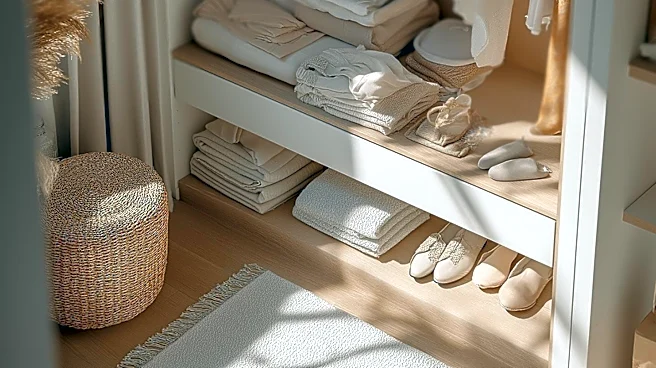
founder of Organise My Life, involves tackling small, specific areas for short durations, typically five to fifteen minutes. Instead of attempting to declutter an entire room, individuals focus on a single drawer, a pantry shelf, or a tabletop. The process involves removing all items from the chosen area, discarding rubbish, expired products, duplicates, and unused items, and then returning only what belongs. Patisso emphasizes that even removing five unnecessary items daily can lead to the elimination of over 1,800 items annually. This method is particularly beneficial for building momentum and establishing regular tidying habits, making home organization feel more achievable and less daunting.
Why It's Important?
The micro-decluttering method offers a significant shift in how individuals approach home organization, moving away from the often-paralyzing prospect of large-scale clean-ups. This method is important because it promotes consistency and reduces the psychological barrier associated with decluttering. By breaking down the task into manageable segments, it empowers individuals to make continuous progress, fostering a sense of accomplishment that encourages further action. This can lead to improved mental well-being by reducing stress and anxiety often linked to cluttered environments. For U.S. households, where consumerism can lead to accumulation, this method provides a practical and sustainable solution for maintaining order. It also encourages a more mindful approach to possessions, potentially reducing unnecessary purchases and promoting a more organized and functional living space for a broader segment of the population.
What's Next?
To effectively implement micro-decluttering, Patisso suggests integrating these short sessions into existing daily routines, such as decluttering a pantry shelf while waiting for dinner to cook or sorting clothes while putting away laundry. A crucial next step for those adopting this method is to have a designated bag or box for items to be given away. This ensures that once an item is identified as no longer needed, it immediately leaves the living space, preventing it from re-entering circulation. The decluttering process is not considered complete until these unwanted items have physically left the home. While micro-decluttering is excellent for maintenance, Patisso notes that homes with significant clutter may still benefit from an initial larger reset before transitioning to this method for ongoing upkeep. The continued adoption of these small, consistent efforts is expected to lead to more sustained tidiness and reduced clutter over time.
Beyond the Headlines
The micro-decluttering trend reflects a broader societal shift towards more sustainable and mindful living practices. Beyond simply tidying up, this method encourages individuals to re-evaluate their relationship with material possessions and combat the pervasive issue of overconsumption. The psychological benefits extend beyond a clean home, fostering a sense of control and reducing decision fatigue that often accompanies large decluttering projects. This approach can also have environmental implications, as it encourages the donation or proper disposal of unused items, potentially reducing waste. Culturally, it challenges the notion that decluttering must be an arduous, infrequent event, promoting instead a continuous, integrated habit. This subtle change in perspective can lead to long-term behavioral modifications, impacting not only individual homes but also contributing to a more conscious consumer culture in the U.S.