



What's Happening?
Residents of small apartments are increasingly turning to multi-functional furniture and vertical storage solutions to optimize their kitchen spaces. This approach addresses the common challenge of limited counter space and overflowing cupboards in compact
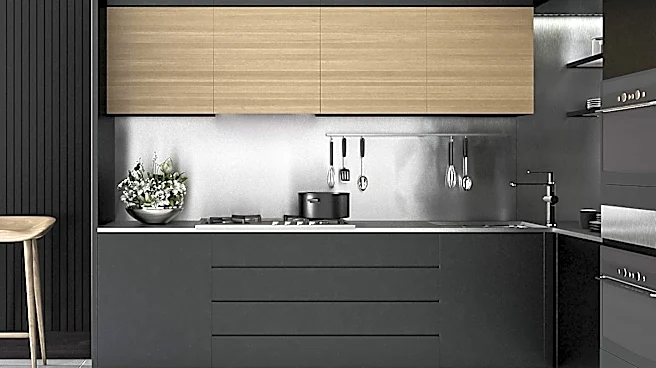
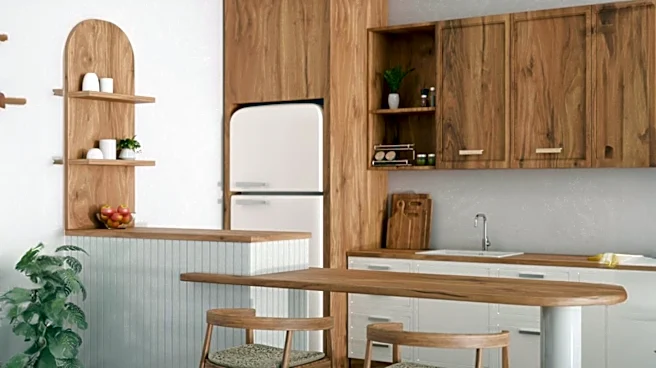
living environments. Key strategies include installing wall-mounted hanging rails with S-hooks for utensils and magnetic strips for knives, freeing up counter space. Unused vertical areas, such as the gaps above cabinetry, are being utilized with woven bins for seasonal items. Multi-functional furniture, like kitchen islands with hidden storage and durable worktops, is transforming cramped rooms into efficient culinary stations. These islands can also serve as dining tables or room dividers in open-plan studios. Inside cabinets, wire shelf risers, vertical pan and lid dividers, cabinet door caddies, and tiered turntables are used to maximize internal storage. Countertop decluttering is achieved by keeping only daily-use items and grouping related essentials on trays or small tiered corner shelves.
Why It's Important?
The adoption of these kitchen optimization strategies is crucial for urban dwellers in the U.S. facing high housing costs and smaller living spaces. This trend impacts the home goods and furniture industries, driving demand for innovative, compact, and versatile products. Manufacturers are responding by designing items that offer multiple functions and fit into tight spaces, creating new market opportunities. For consumers, these solutions improve daily functionality and quality of life, making cooking and meal preparation more manageable in limited areas. The emphasis on renter-friendly options, such as tension-rod shelving and freestanding furniture, highlights the significant portion of the population living in rental properties, influencing product development to avoid permanent modifications. This shift also promotes a more organized and efficient lifestyle, reducing clutter and enhancing the overall aesthetic and utility of small kitchens.
What's Next?
The demand for kitchen storage solutions in small apartments is expected to continue growing, leading to further innovation in product design and material science. Future developments may include more modular and customizable storage systems that can adapt to various kitchen layouts and personal needs. Smart kitchen appliances designed for compact spaces, possibly with integrated storage features, could also become more prevalent. Retailers will likely expand their offerings of specialized kitchen organizers and multi-functional furniture, making these solutions more accessible to a broader consumer base. Additionally, there might be an increased focus on sustainable and durable materials for these products, aligning with growing environmental consciousness. The success of these strategies could also influence future apartment designs, with architects and developers incorporating more built-in, space-efficient kitchen solutions from the initial planning stages.
Beyond the Headlines
Beyond the immediate practical benefits, the trend of optimizing small kitchen spaces reflects a broader cultural movement towards mindful consumption and efficient living. It encourages individuals to critically assess their needs and possessions, fostering a minimalist approach that values utility and organization over accumulation. This can have psychological benefits, as a decluttered and functional kitchen can reduce daily stress and enhance a sense of well-being. Environmentally, it promotes sustainability by encouraging the use of existing space more effectively and potentially reducing the need for larger homes or excessive purchases. The ingenuity involved in these hacks also highlights a growing DIY culture, where individuals are empowered to creatively solve their living challenges. This shift in mindset can lead to a greater appreciation for thoughtful design and resourcefulness in everyday life, influencing consumer behavior beyond just kitchen organization.