




What's Happening?
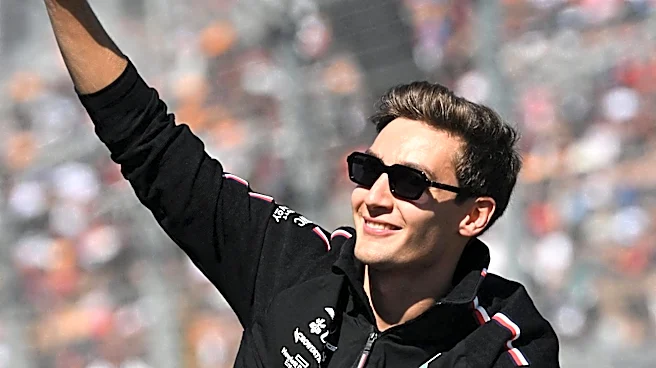
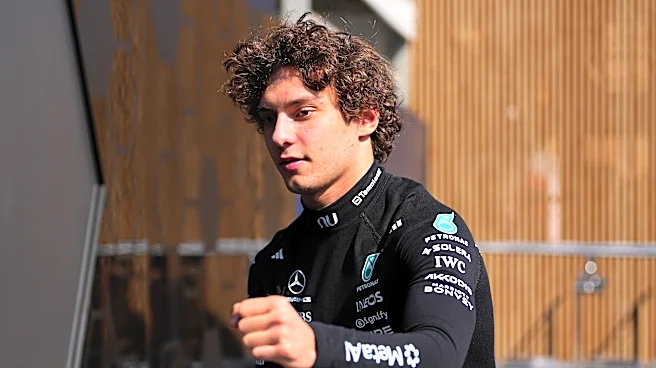
George Russell has publicly expressed his profound disappointment and frustration following his defeat in the 2026 Formula 1 World Championship to his Mercedes teammate, Kimi Antonelli. Russell, who was initially a favorite for the title and won the opening
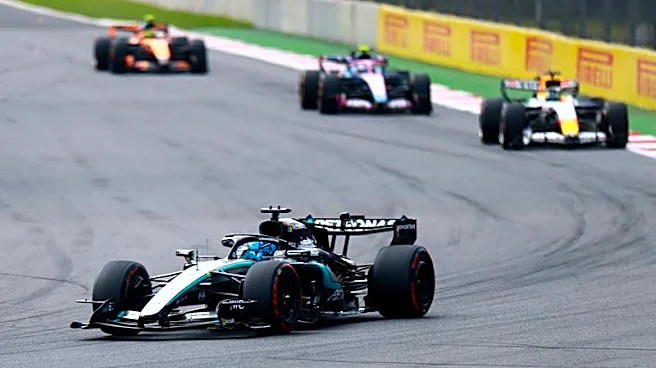
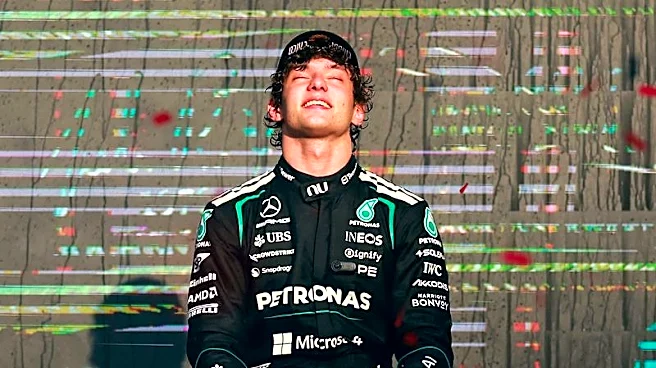
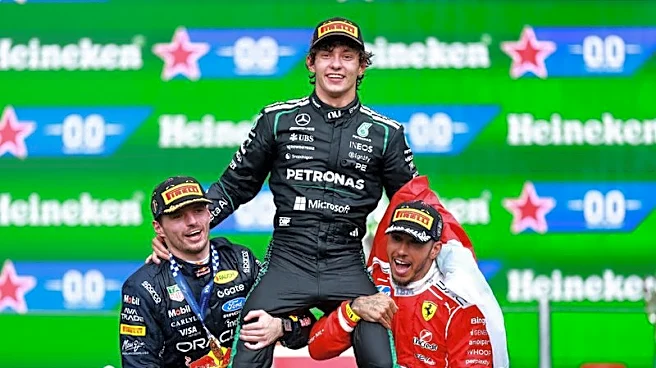
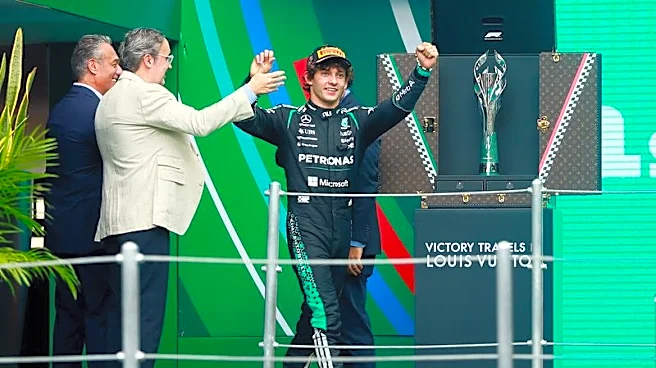
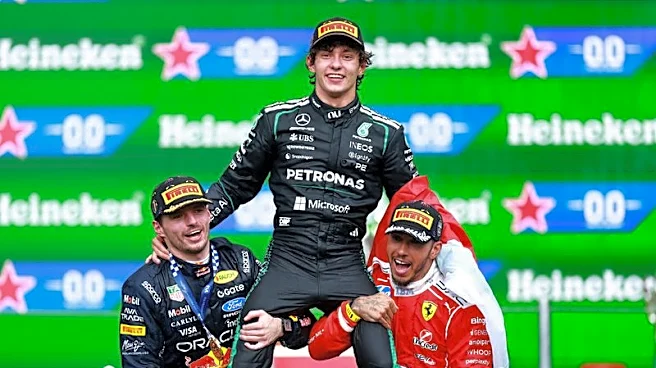
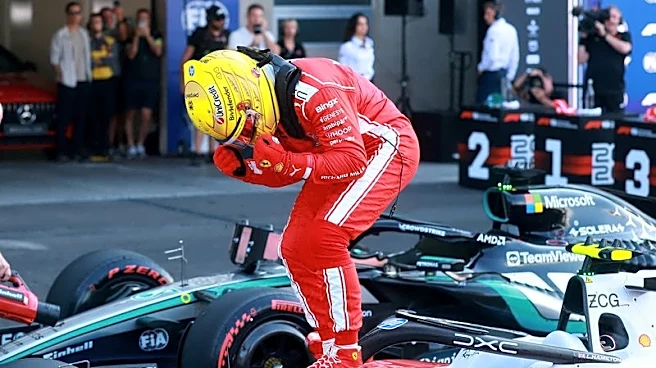
round in Australia, saw his championship hopes unravel due to a combination of tough luck and poor performances throughout the season. Antonelli, after a challenging rookie year in 2025, demonstrated significant improvement, securing his maiden title with four rounds remaining at the Mexico City Grand Prix, becoming the sport's youngest-ever champion. Mercedes team boss Toto Wolff confirmed that Russell was 'distraught' and had skipped post-race media duties, though he did congratulate Antonelli. Russell later took to social media to share a heartfelt message, acknowledging that 2026 'was not meant to be my year' and thanking the team for producing a championship-winning car.
Why It's Important?
This event is significant as it highlights the intense internal competition within top Formula 1 teams and the psychological toll it can take on drivers. Russell's public statement provides a rare glimpse into the emotional challenges faced by elite athletes when expectations are not met. The dynamic between teammates, especially when one secures the championship and the other falls short, can profoundly impact team cohesion and future strategies. For Mercedes, while celebrating a constructors' and drivers' championship, managing the morale of both drivers will be crucial. The outcome also underscores the unpredictable nature of F1, where early season success does not guarantee a championship, and a younger talent can rapidly ascend to dominance. This scenario could influence future driver market decisions and team development priorities, as teams seek to balance experienced drivers with emerging talents.
What's Next?
Russell has vowed to give his 'absolute all' for the remainder of the 2026 season and into 2027, aiming to rediscover his previous performance levels. This commitment suggests a period of intense self-reflection and training for the British driver. For Mercedes, the focus will shift to maintaining its championship-winning form and managing the competitive dynamic between Antonelli and Russell. The team will likely continue to support both drivers, but Antonelli's ascendancy will undoubtedly position him as a key figure for the future. The remaining races of the 2026 season will provide opportunities for Russell to demonstrate his resolve and begin building momentum for the next championship campaign. The winter break will be critical for Russell to detach and recover, as suggested by former F1 champion Nico Rosberg, to prevent the 'scary' feeling of a lost season from impacting his future performance.
Beyond the Headlines
The narrative of Russell's season, from early favorite to championship runner-up, offers a compelling study in resilience and mental fortitude in professional sports. His candid admission of having 'more bad days than good' resonates beyond the racing world, touching on universal themes of failure and perseverance. The rise of Kimi Antonelli as the youngest F1 champion also signals a generational shift in the sport, potentially inspiring a new wave of young talent. This development could lead to increased scrutiny on driver development programs and the pressure placed on young drivers to perform at the highest level. The emotional honesty displayed by Russell, despite his disappointment, contributes to a more humanized perception of F1 drivers, moving beyond the competitive facade to reveal the personal struggles inherent in their demanding careers.