



What's Happening?
The Latin American Spanish dub of the film 'I Play Rocky' has sparked controversy in Mexico's voice-over community. Tomás Galván, an impressionist known online as Imitandup, was cast to voice the young Sylvester Stallone. This decision has drawn criticism
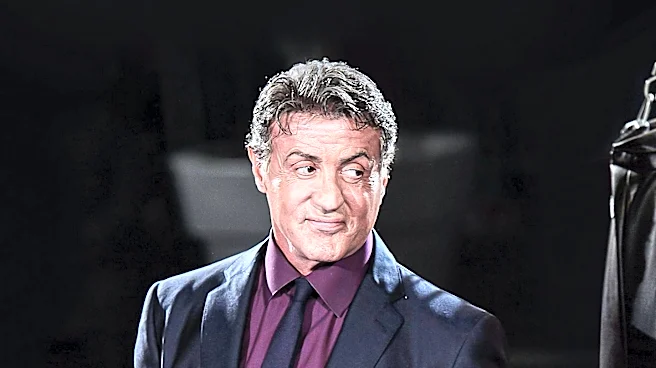
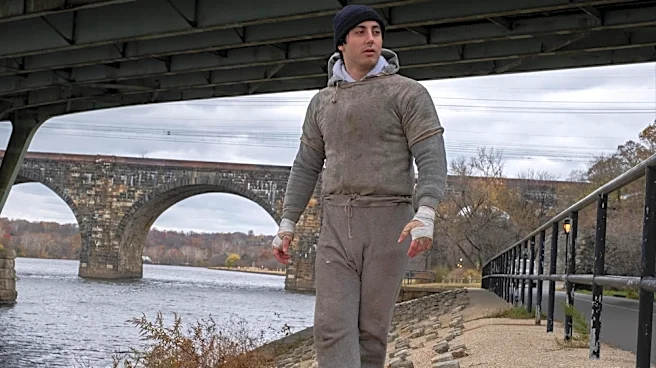
from Víctor Hugo Aguilar, the actor who voiced Rocky Balboa in the Mexican redub of the first five 'Rocky' films. Aguilar argues that an impressionist is not equivalent to a trained actor, emphasizing the difference in skill sets required for performance versus imitation. Galván, who has four years of dubbing experience and a background in commercial announcing, stated he auditioned without knowing the project's nature and found the role challenging due to Stallone's cinematic weight. The film, titled 'Yo soy Rocky' in Latin America, is Peter Farrelly's account of Stallone's fight to star in his own script.
Why It's Important?
This dispute highlights a significant debate within the dubbing industry regarding the casting of impressionists or social media personalities over traditionally trained voice actors. It raises questions about the value of acting training versus vocal mimicry in character portrayal, especially for iconic figures. For the Mexican dubbing industry, this incident, alongside a recent controversy over celebrity voices in the 'Wildwood' dub, underscores a growing concern among professional voice actors about job opportunities and the perceived devaluation of their craft. The outcome of this debate could influence future casting decisions in Latin American dubbing, potentially leading to a re-evaluation of criteria for voice roles and a stronger emphasis on acting experience. It also reflects broader industry trends where online fame can sometimes translate into professional opportunities, challenging established norms.
What's Next?
The Latin American Spanish dub of 'I Play Rocky' is set to be released across the region on November 19, following its Mexican premiere on November 12. Audiences will then evaluate whether Galván's portrayal sounds like an actor embodying a character or merely an impression of a famous voice. The ongoing debate within the dubbing community is likely to continue, with potential implications for future casting practices. Professional dubbing actors may intensify their advocacy for trained talent, while impressionists and online personalities might continue to seek opportunities in the field. The controversy could also prompt industry bodies to establish clearer guidelines or standards for casting in dubbing projects, aiming to balance commercial appeal with artistic integrity and professional skill.
Beyond the Headlines
The controversy surrounding the casting of an impressionist in 'I Play Rocky' delves into the fundamental nature of performance versus imitation in voice acting. It raises ethical questions about the integrity of character portrayal when a voice is merely mimicked rather than embodied through acting. This situation also reflects a broader cultural shift where digital influence and viral popularity increasingly intersect with traditional artistic professions, sometimes creating tension between established professionals and new talents emerging from online platforms. The debate touches upon the economic realities of the dubbing industry, where producers might opt for recognizable voices or cost-effective solutions, potentially at the expense of experienced actors. Ultimately, it prompts a deeper reflection on what constitutes authentic artistic contribution in the realm of voice performance and the evolving landscape of talent acquisition in entertainment.