


What's Happening?
QuantumScape, a company specializing in solid-state lithium-metal battery technology, announced its QS PowerBlock on October 8, 2026. This new in-rack energy storage design is specifically developed for AI data centers. The company claims the QS PowerBlock offers
four times the power density and five times the runtime compared to an Open Compute Project reference specification based on conventional lithium-ion systems. The design is modular, supports 800VDC, and is intended to power 1 MW racks. QuantumScape's announcement references its QSE-5 cell technology as the foundation for the PowerBlock. However, the company has not provided independent test data to validate these performance claims, nor has it disclosed pricing, commercial availability, or specific customer integrations. The QS PowerBlock is currently presented as a reference design rather than a commercially available product, with plans for integration with rack-level power electronics and battery-management systems still in development.
Why It's Important?
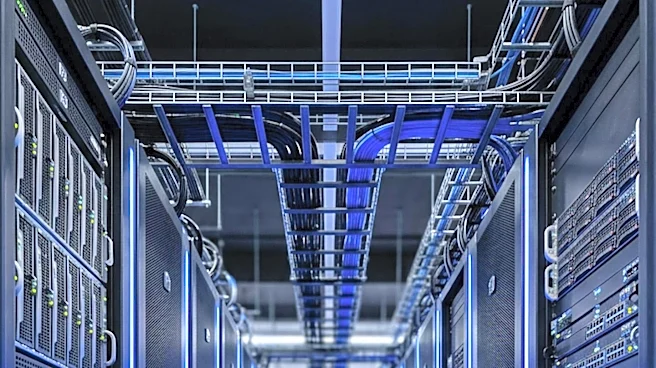
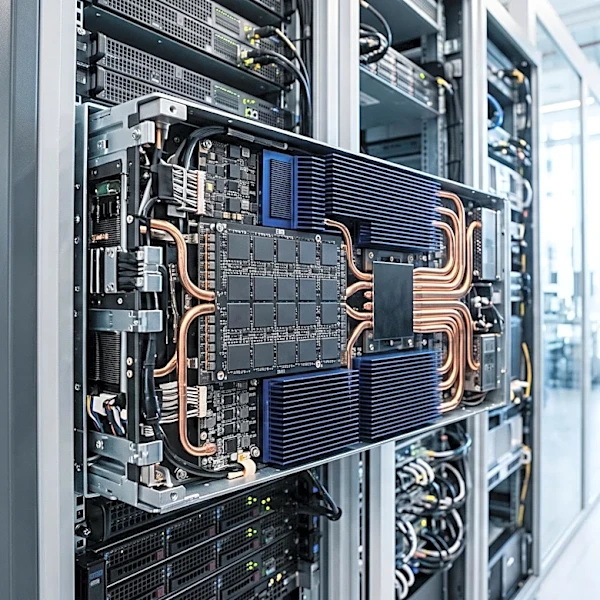
The introduction of the QS PowerBlock is significant for the rapidly evolving AI data center industry, which faces immense power demands. AI workloads are characterized by sharp power draw swings, making efficient and dense in-rack energy storage crucial for stability and performance. If QuantumScape's claims of increased power density and runtime are independently validated, the QS PowerBlock could offer data center operators substantial advantages. These include reducing the physical footprint required for energy storage, improving the ability to ride through power disturbances, and smoothing demand on the grid. The shift to 800VDC architecture also aligns with industry trends towards higher voltage systems to reduce energy loss and conductor size in high-power environments. This development could influence future data center infrastructure design and investment, potentially shifting the competitive landscape for energy storage solutions in the AI sector.
What's Next?
The immediate next steps for QuantumScape will likely involve providing more detailed technical specifications, such as absolute capacity, discharge duration, and module dimensions, which engineers require for design integration. A crucial development would be the announcement of a pilot customer or a partnership with a rack manufacturer, which would move the QS PowerBlock from a reference design to a tangible program. Independent third-party validation of QuantumScape's performance claims (4x power density, 5x runtime) will be essential for market acceptance and credibility. The company will also need to address pricing and commercial availability to attract potential buyers. Competitors in the battery and power electronics sectors are expected to respond with their own in-rack storage solutions, intensifying innovation in this critical area for AI infrastructure. Future announcements regarding integration with power electronics and battery management systems will also be key indicators of the product's readiness for deployment.
Beyond the Headlines
The QS PowerBlock announcement highlights a broader industry trend where battery technology, traditionally focused on electric vehicles, is increasingly being adapted for data center applications. The unique demands of AI data centers, particularly concerning power density, safety, and thermal management, present both challenges and opportunities for battery manufacturers. Solid-state battery technology, like QuantumScape's, offers potential advantages in safety due to the absence of liquid electrolytes, which could address concerns about thermal events in dense battery installations. However, the transition from cell-level innovation to reliable, rack-ready modules involves significant engineering hurdles in pack design, thermal management, and manufacturing yield. The success of solutions like the QS PowerBlock could also influence policy discussions around data center energy consumption and grid stability, as efficient in-rack storage can help mitigate the impact of AI facilities on local power grids and potentially ease community pushback against new data center developments.