






What's Happening?
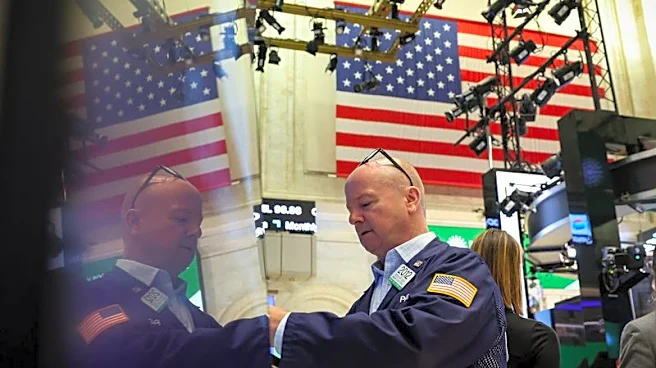
Ether, the cryptocurrency associated with the Ethereum network, fell to $1,983 on November 12, 2026, marking its lowest point since August. This decline followed the immediate resignation of Nvidia CEO Jensen Huang, which triggered a sell-off in technology
stocks. The cryptocurrency market, particularly Ether, often reacts to broader tech sector movements due to shared investor bases. Concurrently, US Ether ETFs experienced significant outflows, with $144.81 million withdrawn on November 11, marking the fifth consecutive day of outflows. BlackRock's ETHA fund accounted for a substantial portion of these withdrawals, contributing $129.78 million. Over seven weeks, investors have pulled $2.35 billion from Ether ETFs, with October seeing a record $1.607 billion in net outflows. Despite these recent withdrawals, cumulative net inflows into Ether ETFs since their launch in July 2024 still stand at approximately $11.59 billion.
Why It's Important?
The drop in Ether's price and the sustained outflows from US Ether ETFs highlight the cryptocurrency's sensitivity to external market factors and investor sentiment. The resignation of a prominent tech CEO like Jensen Huang, even from a seemingly unrelated sector, can trigger a broader risk-off environment, leading investors to liquidate more volatile assets like cryptocurrencies. The significant outflows from Ether ETFs indicate a shift in investor confidence, suggesting that some are trimming their exposure to Ether specifically, rather than a general exit from all crypto funds. This trend could impact the stability and perceived value of Ether, potentially influencing future institutional investment decisions and regulatory perspectives on cryptocurrency-linked financial products in the U.S. The correlation between tech stock performance and crypto prices underscores the increasing integration of digital assets into the broader financial ecosystem.
What's Next?
The immediate future for Ether will likely be influenced by several factors. The upcoming Nvidia quarterly results on November 17, the first under an interim CEO, could further impact tech stock sentiment and, by extension, cryptocurrency prices if the outlook is weak. Additionally, the Federal Reserve's meeting on December 9, with a high probability of a 0.25 percentage point rate hike, could create further headwinds for risk assets like Ether by making credit more expensive and safe assets more attractive. Continued outflows from Ether ETFs would exert ongoing selling pressure. Conversely, a rebound could occur if producer prices, due on November 13, come in lower than expected, potentially easing rate hike expectations. Chart analysis suggests that a daily close above $2,100 is crucial for a recovery, with resistance levels at $2,031, $2,100, and $2,187, and support at $1,875.
Beyond the Headlines
The recent events surrounding Ether's price and ETF outflows reveal deeper implications regarding the maturity and interconnectedness of the cryptocurrency market. The strong correlation with traditional tech stocks suggests that Ether, despite its decentralized nature, is increasingly viewed as a risk asset within a broader investment portfolio, rather than an entirely separate asset class. This could lead to increased scrutiny from financial regulators, who may seek to impose more stringent oversight on crypto-linked investment vehicles like ETFs. The behavior of large holders, such as the Ethereum Foundation selling ETH, also raises questions about internal confidence and strategic asset management within the crypto ecosystem. The ongoing debate about the valuation of AI stocks and their impact on crypto could shape long-term investment strategies, pushing investors to re-evaluate the fundamental drivers of cryptocurrency value beyond speculative trends.