


What's Happening?
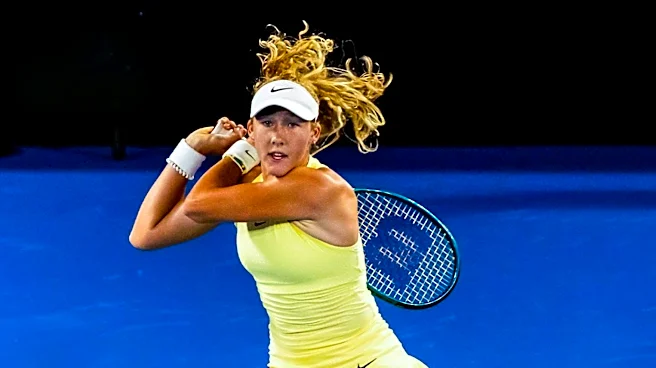
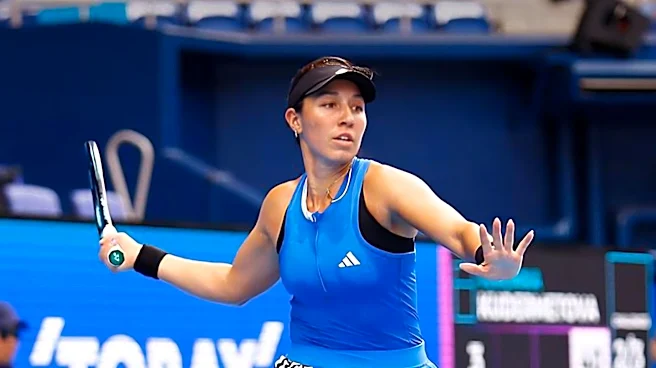
Jessica Pegula, the world number five tennis player, was recorded criticizing Mirra Andreeva, the world number three and reigning Roland Garros champion, during a practice session at the Indian Wells Tennis Garden. Pegula expressed that she had 'lost
respect' for Andreeva, describing her as a 'diva' who 'needs to mature.' The comments were captured by cameras and ambient microphones ahead of the WTA Finals. Pegula, daughter of Terry Pegula, owner of the Buffalo Bills and Buffalo Sabres, also commented on Andreeva's treatment of her coach, Conchita Martínez. She stated that if she were Andreeva's coach, she would not tolerate such behavior, particularly after a strong performance. Both Pegula, 32, and Andreeva, 19, are participating in the WTA Finals in Indian Wells and have been placed in different groups, meaning they could only face each other in the semifinals.
Why It's Important?
This incident introduces an unexpected layer of tension and personal drama into the WTA Finals, a premier event in women's tennis. Public criticism from a top-ranked player like Pegula towards another prominent player, especially a rising star like Andreeva, can significantly impact the tournament's atmosphere and player dynamics. Such remarks can create a narrative of rivalry and potentially affect the mental state of both players involved. For Andreeva, being publicly labeled as a 'diva' and criticized for her maturity could add pressure and scrutiny to her performance. For Pegula, her candid comments might be seen as a display of honesty or, conversely, as unprofessional, potentially influencing public perception and fan engagement with the sport. The incident also highlights the intense competitive environment and the personal stakes involved at the highest levels of professional tennis.
What's Next?
The immediate aftermath of Pegula's comments will likely involve increased media attention on both players during the WTA Finals. Journalists will undoubtedly question both Pegula and Andreeva about the remarks, potentially leading to further public statements or reactions. The dynamic between the two players, should they advance to the semifinals and face each other, will be a focal point, adding an extra layer of intrigue to any potential match-up. Coaches and fellow players may also be asked for their opinions, which could further shape the narrative. Beyond the tournament, the incident could influence future interactions between Pegula and Andreeva on the tour, potentially fostering a long-term rivalry or a more strained professional relationship. The WTA may also monitor the situation for any potential code of conduct implications, though public comments of this nature are generally not subject to penalties unless they escalate.
Beyond the Headlines
This public critique delves into broader themes of sportsmanship, professional conduct, and the pressures faced by young athletes in elite competitions. Andreeva, at 19, is still developing her professional persona, and Pegula's comments raise questions about how established players should mentor or address the behavior of younger competitors. The incident also touches on the role of coaches and player-coach relationships, particularly the boundaries of respect and authority within those partnerships. The 'diva' label, often applied to successful female athletes, can carry gendered connotations, prompting discussions about how female athletes are perceived and judged compared to their male counterparts. Ultimately, this event underscores the constant scrutiny athletes face, where private conversations can become public spectacles, influencing careers and public perception beyond their on-court performance.