





What's Happening?
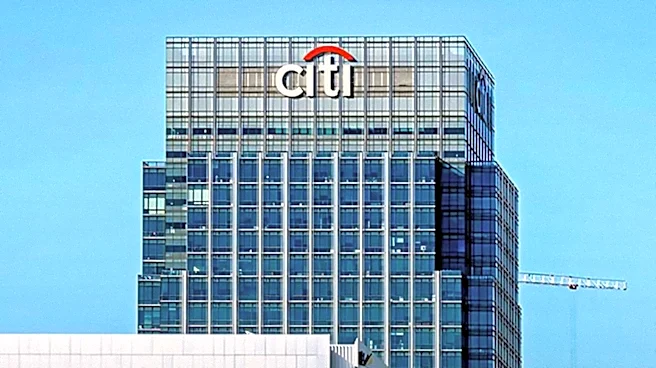
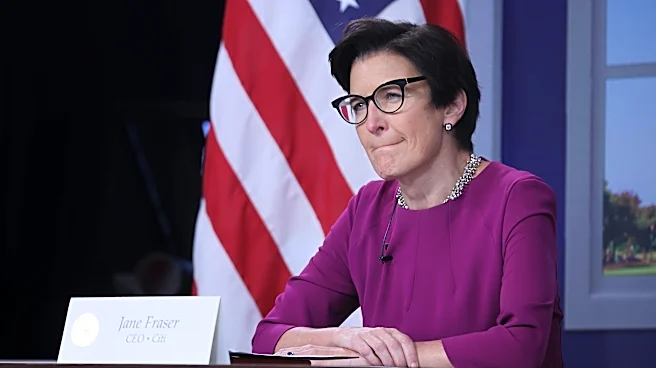
Citigroup, under the leadership of CEO Jane Fraser, is actively pursuing a multi-year business transformation strategy. This initiative aims to streamline operations, enhance profitability, and concentrate on five core business areas: Services, Markets,
Banking, Wealth, and U.S. Consumer Cards. These strategic efforts have begun to show positive results, with revenues increasing by 12% year-over-year, reaching $73.24 billion in the first nine months of 2026. Management anticipates a compound annual growth rate of 4-5% for revenues through 2026. The company is also nearing the completion of its exit from non-core international consumer banking operations, having sold businesses in 10 markets and winding down operations in two others by September 2026. Additionally, Citigroup announced a 12% quarterly dividend increase, pending board approval, following the Federal Reserve’s 2026 stress test.
Why It's Important?
Citigroup's comprehensive business transformation is significant for the U.S. banking sector and its investors. By focusing on core businesses and divesting non-essential international consumer banking operations, Citigroup aims to improve its financial stability and profitability. This strategic shift could lead to a more resilient and efficient institution, potentially increasing shareholder value through enhanced returns and dividends. The anticipated revenue growth and improved efficiency ratio, projected to be below 60% in 2026 and further declining over the medium term, indicate a stronger financial outlook. For investors, Citigroup's current valuation, trading at a forward price-to-earnings (P/E) of 8.75X, is considered more attractive compared to some competitors, suggesting a compelling investment opportunity for those seeking growth at a discounted price.
What's Next?
Citigroup expects to deconsolidate Banamex in 2027, with a subsequent initial public offering (IPO) contingent on market conditions and regulatory approvals. The company plans to deploy an additional $5 billion in strategic investments through 2028, primarily targeting technology modernization, marketing, front-office talent, and branch renovations, with approximately $500 million of these investments being accelerated into the second half of 2026. Management is also targeting a return on tangible common equity (RoTCE) of above 11% in 2026, increasing to 11-13% in 2027-2028, and 14-15% over 2029-2031. These initiatives are expected to further enhance operational efficiencies and support long-term profitability.
Beyond the Headlines
The ongoing transformation at Citigroup under CEO Jane Fraser highlights a broader trend within the financial industry towards strategic streamlining and increased focus on core competencies. The emphasis on technology and AI investments, alongside workforce optimization and process simplification, reflects the evolving landscape of banking where digital innovation and operational efficiency are paramount. This strategic pivot could set a precedent for other large financial institutions facing similar pressures to adapt to changing market dynamics and regulatory environments. The company's commitment to improving shareholder returns through dividends and increased RoTCE targets also signals a renewed confidence in its future performance and a potential shift in investor perception.