





What's Happening?
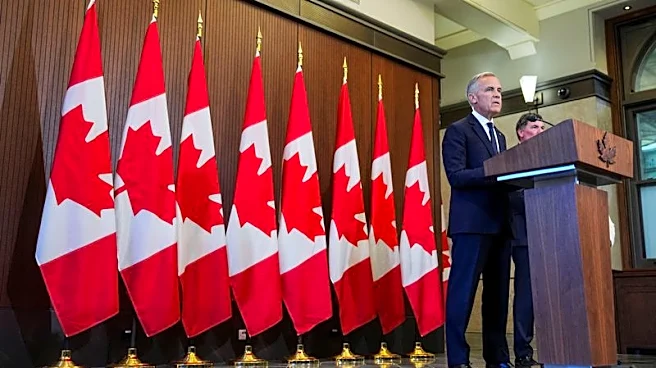
Canadian Prime Minister Mark Carney announced the suspension of trade negotiations with the United States late Friday night, leading to the immediate implementation of new 50% U.S. tariffs on approximately $20 billion worth of Canadian goods. Carney attributed
the breakdown in talks to what he described as 'uneconomic' and 'unfair' demands from the Trump administration, stating that the U.S. proposed new terms that undermined Canada's net benefits and questioned the reliability of any deal. The tariffs, which went into effect at midnight, impact a wide range of Canadian products, including hockey sticks, building materials, liquors, and certain clothing items. In response, Carney stated that Canada would retaliate with matching tariffs on U.S. goods, focusing on sectors such as steel, dairy, appliances, agricultural equipment, pulp and paper, and electronics, effective September 8.
Why It's Important?
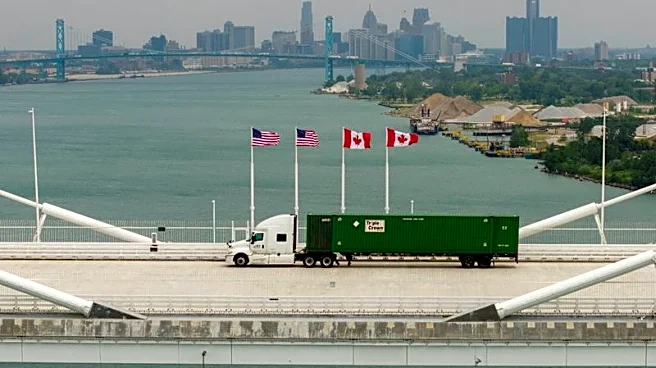
This collapse in trade talks and the imposition of new tariffs mark a significant escalation in trade tensions between the U.S. and Canada, two of the world's largest trading partners. The 50% duties are expected to drive up costs for American consumers and businesses relying on Canadian imports, further disrupting critical supply chains. For Canada, the tariffs will negatively impact its export-oriented industries and could lead to job losses. The Canadian Chamber of Commerce has warned of a 'body blow to North American competitiveness,' predicting increased costs for Americans and a loss of customers and investment for Canadians. This trade dispute also raises concerns about the stability of the United States-Mexico-Canada Agreement (USMCA), which President Trump negotiated during his first term, as the Canadian Prime Minister previously stated that the threatened tariffs would violate the agreement.
What's Next?
With trade talks suspended and new tariffs in place, the immediate future points to a deepening trade conflict between the U.S. and Canada. Canada's announced retaliatory tariffs, set to take effect on September 8, will further impact U.S. industries. The U.S. Trade Representative Jamieson Greer indicated that no new talks are planned and that the U.S. would 'respond to Canadian retaliation,' suggesting a potential tit-for-tat escalation. The new U.S. tariffs, imposed under Section 338 of the Tariff Act of 1930, are likely to face legal challenges. Provincial premiers in Canada have expressed varied reactions, with some supporting a strong response and others advocating for a swift resumption of negotiations. The U.S. Chamber of Commerce and other business groups will likely continue to lobby for a resolution to avoid further economic damage.
Beyond the Headlines
This trade dispute extends beyond immediate economic impacts, touching upon issues of national sovereignty and the future of international trade agreements. Prime Minister Carney's assertion that the U.S. sought to 'restrict our protections of our language, our culture, and in effect, our sovereignty' highlights deeper points of contention than mere economic terms. The use of Section 338 of the Tariff Act of 1930, a previously unused provision, signals a more aggressive stance in U.S. trade policy. This situation could prompt other U.S. trading partners to re-evaluate their own trade relationships and agreements, potentially leading to a more protectionist global trade environment. The long-term implications could include a re-shoring of supply chains, increased domestic production, and a re-evaluation of the benefits of multilateral trade pacts.