


What's Happening?
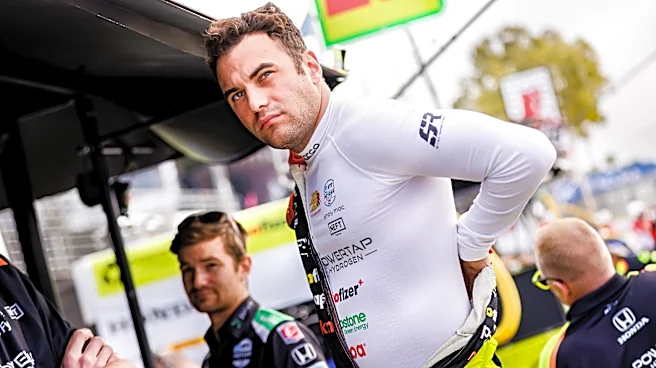
Sebastien Bourdais, a 47-year-old French driver, recently secured his first Hypercar victory at Monza in the World Endurance Championship race. Driving the #38 Cadillac V-Series.R alongside Earl Bamber and Jack Aitken, this win comes as his five-year
contract with General Motors is set to expire without a new deal. Bourdais emphasized the importance of this victory in demonstrating his continued competitiveness in a sport that often favors younger drivers. He noted that racing teams tend to have a 'short-term memory' regarding veteran talent, requiring drivers to constantly prove their worth. The win provides significant validation for his future career prospects, especially as he is currently in discussions with various teams across the Atlantic for new opportunities in 2027. This victory also offers relief after a previous heartbreaking retirement at Le Mans earlier this year due to a mechanical failure.
Why It's Important?
Bourdais's victory at Monza holds significant importance for his career and highlights a broader issue within professional motorsport regarding veteran drivers. In an industry increasingly focused on youth, his win serves as a powerful reminder that experience and skill remain critical assets. For teams evaluating their rosters, this performance provides 'food for thought,' potentially influencing decisions about driver contracts and team compositions for the upcoming seasons. The win could also impact the perception of older drivers in endurance racing, potentially encouraging teams to value seasoned talent more. His situation underscores the competitive nature of motorsport, where even highly accomplished drivers must continually prove their capabilities to secure their positions, affecting their financial stability and career longevity. The end of his Cadillac partnership makes this victory particularly timely, as it strengthens his negotiating position for future drives.
What's Next?
Following his Monza victory, Sebastien Bourdais will continue discussions with potential teams for the 2027 season, leveraging this recent success as a key talking point. The win is expected to enhance his market value and open doors to new opportunities, particularly as his contract with General Motors concludes. He plans to savor this maiden Hypercar title before fully immersing himself in the search for a new team. The broader implications for motorsport may include a renewed focus on the value of experienced drivers, potentially influencing team strategies and driver categorization systems, which Bourdais has previously criticized for pushing older racers into early retirement. His performance could also inspire other veteran drivers to continue competing at high levels, challenging the sport's youth-centric trends.
Beyond the Headlines
Beyond the immediate impact on Bourdais's career, this event sheds light on the ethical and systemic challenges faced by veteran athletes in high-stakes professional sports. The 'short-term memory' syndrome described by Bourdais points to a broader cultural issue where past achievements are quickly overshadowed by current performance, creating immense pressure on athletes to constantly prove themselves. This dynamic can lead to premature retirements for highly skilled individuals, potentially depriving sports of valuable experience and mentorship. The situation also raises questions about the fairness of driver categorization systems, which may inadvertently disadvantage older, yet still competitive, racers. Bourdais's continued success despite these hurdles highlights resilience and the enduring power of talent, prompting a deeper reflection on how sports leagues and teams can better balance the integration of new talent with the retention of seasoned professionals.