






What's Happening?
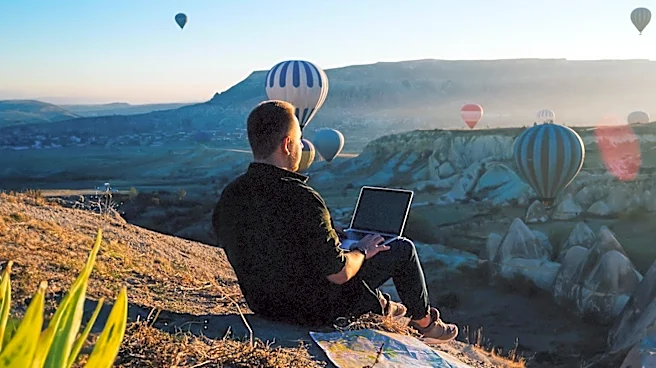
Digital nomads are individuals who leverage technology to work remotely, enabling them to travel and live in various locations. This lifestyle is supported by a growing ecosystem of resources, including specialized accommodations and community platforms.
For instance, a couple recently spent two years working remotely in Europe using a digital nomad visa, highlighting the feasibility of this lifestyle. There are also Meetup groups designed for digital nomad beginners to exchange tips and experiences, fostering a sense of community. Job boards specifically cater to remote operations roles, connecting digital nomads with suitable employment opportunities. Furthermore, accommodations like a one-bedroom apartment in Split, Croatia, are being tailored with amenities such as fully equipped kitchens, washing machines, and streaming services to meet the specific needs of remote workers, ensuring a comfortable and productive stay.
Why It's Important?
The rise of digital nomadism signifies a significant shift in the traditional work paradigm, impacting industries, labor markets, and global economies. For businesses, it expands the talent pool beyond geographical limitations, potentially leading to more diverse and skilled workforces. However, it also necessitates adapting management strategies and ensuring robust cybersecurity for remote operations. For individuals, it offers unprecedented flexibility and opportunities for cultural immersion and personal growth, but also requires self-discipline and effective time management. The hospitality and real estate sectors are increasingly catering to this demographic, developing specialized housing and services. This trend could lead to economic benefits for host countries through increased tourism and longer-term stays, but also raises questions about taxation, social security, and the integration of transient populations into local communities. The growth of digital nomad communities and resources underscores a broader societal acceptance and institutionalization of remote work as a viable and desirable career path.
What's Next?
The digital nomad movement is expected to continue its expansion, driven by technological advancements and evolving work cultures. We can anticipate further development of specialized infrastructure, including co-working spaces, digital nomad villages, and tailored visa programs from more countries seeking to attract this demographic. Governments may also begin to address the regulatory complexities surrounding remote work, such as tax implications for individuals working across different jurisdictions and the provision of social services. The growth of online communities and platforms will likely enhance networking and support systems for digital nomads, making the lifestyle more accessible and sustainable. Businesses will continue to refine their remote work policies and tools, potentially leading to more hybrid work models that blend office presence with remote flexibility. Educational institutions might also adapt by offering more programs focused on skills relevant to remote work and digital entrepreneurship.
Beyond the Headlines
Beyond the immediate economic and logistical aspects, the digital nomad phenomenon has deeper implications for societal structures and individual identities. It challenges traditional notions of home, community, and national belonging, fostering a more globalized and fluid sense of identity. The constant exposure to diverse cultures can lead to increased cross-cultural understanding and a broader worldview, but also presents challenges related to cultural integration and maintaining stable social connections. There are ethical considerations regarding the impact of digital nomads on local economies and housing markets, particularly in popular destinations where an influx of remote workers can drive up living costs for residents. The emphasis on location independence also raises questions about environmental sustainability, given the increased travel. Furthermore, the lifestyle can blur the lines between work and leisure, potentially leading to burnout if not managed effectively. This evolving way of life prompts a re-evaluation of work-life balance and the pursuit of personal fulfillment in a hyper-connected world.