




What Are Critical Minerals?
Critical minerals are elements essential for modern technologies, especially for the green energy transition. This list includes names you might have heard of, like lithium and cobalt for batteries, and rare earth elements for electric motors and wind
turbines. India has identified 30 such minerals, including nickel, graphite, and titanium, as vital for its economic and national security. Currently, India is almost entirely dependent on imports for many of these, such as lithium, cobalt, and nickel, making the country vulnerable to global supply chain disruptions and geopolitical tensions. This dependency is a significant hurdle for ambitions in defence, electronics, and renewable energy.
The Geopolitical Supply Chain Dilemma
The global supply of critical minerals is heavily concentrated in a few nations. For instance, China dominates the refining of lithium, cobalt, and rare earth elements. This concentration gives a handful of countries immense leverage, creating strategic vulnerabilities for importers like India. Any disruption, whether due to political friction or trade policy changes, could stall India's progress towards its goals, from expanding its electric vehicle fleet to achieving its net-zero emissions target by 2070. To counter this, India's strategy is twofold: secure international partnerships and, more importantly, bolster domestic capabilities.
Urban Mining and the Circular Economy
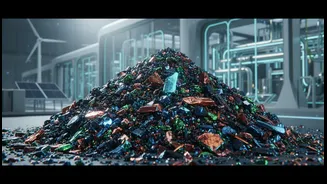
The most promising domestic source for these minerals isn't a traditional mine; it's our cities. The concept of 'urban mining' involves recovering valuable materials from discarded products, particularly electronic waste (e-waste). India is one of the world's top producers of e-waste, generating millions of tonnes annually from old phones, computers, and batteries. This waste is a rich, concentrated source of critical minerals. By adopting a circular economy model—where waste is treated as a resource to be reused and recycled—India can turn a growing environmental problem into a strategic asset. This approach reduces the need for new mining and cuts down on import dependency.
From Scrap to Self-Reliance
Recognising this opportunity, the Indian government has launched the National Critical Mineral Mission and introduced incentive schemes to boost recycling capacity. The goal is to build a robust domestic value chain that can extract minerals from e-waste and other scrap materials. Recent industry commitments for recycling capacity have already far surpassed initial government targets, showing strong private sector interest. Developing this ecosystem not only secures raw materials for manufacturing but also brings significant environmental benefits, as recycling uses far less energy and produces fewer carbon emissions than traditional mining.
Creating India's New Energy Careers
This shift towards a circular economy is also a powerful engine for job creation. The green transition is expected to create millions of jobs in India by 2030, with renewable energy, waste management, and recycling being key sectors. The critical minerals recycling industry will require a new generation of skilled workers. These 'green-collar' jobs will span the entire value chain, from the collection and dismantling of e-waste to high-tech roles in metallurgical extraction and material science. While the informal sector has long been the backbone of waste collection, the move towards formal, advanced recycling facilities promises safer working conditions and higher-skilled employment opportunities, though ensuring a just transition for informal workers remains a challenge.