






What's Happening?
Cenk Uygur and Ana Kasparian have provided an analysis of a recent tech sell-off that significantly impacted major stocks, including Nvidia. Their discussion delved into how opposition to data centers emerged as a notable issue during the recent midterm
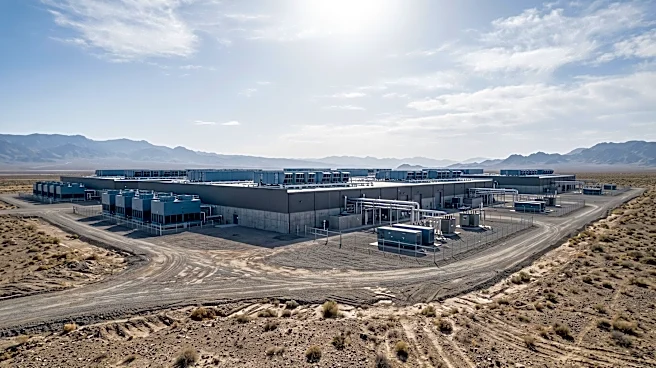
elections. They also explored the critical question of who bears the financial responsibility for powering these data centers and its implications for the artificial intelligence industry. This analysis suggests a growing intersection between technological infrastructure, environmental concerns, and political discourse, particularly as the demand for AI-driven technologies continues to expand. The financial performance of AI companies is increasingly linked to broader societal and political factors, such as energy consumption and infrastructure development.
Why It's Important?
The analysis by Uygur and Kasparian highlights a crucial emerging challenge for the U.S. technology sector, particularly the AI industry. The opposition to data centers, as observed in the midterms, indicates a rising public and political awareness of the environmental and infrastructural demands of AI. This could lead to increased regulatory scrutiny, local resistance to new data center constructions, and higher operational costs for AI companies. The debate over who pays for the power consumed by these energy-intensive facilities directly impacts the profitability and scalability of AI development. If these costs are passed onto consumers or become a significant burden for tech companies, it could slow innovation or make AI services more expensive, affecting various U.S. industries reliant on AI advancements.
What's Next?
The growing opposition to data centers and the debate over their power costs suggest that AI companies and policymakers will need to address these issues more proactively. We may see increased investment in renewable energy sources for data centers, or the development of more energy-efficient AI technologies. Local and state governments might implement new regulations or incentives related to data center development and energy consumption. Furthermore, the political discourse around AI infrastructure is likely to intensify, potentially influencing future elections and policy decisions. Tech companies might also explore new geographical locations for data centers where energy is cheaper or environmental regulations are less stringent, leading to shifts in regional economic development.
Beyond the Headlines
The discussion by Uygur and Kasparian points to a deeper societal reckoning with the environmental footprint of the digital age. As AI becomes more pervasive, the energy demands of its underlying infrastructure—data centers—will continue to grow, posing significant challenges to sustainability goals. This situation raises ethical questions about the balance between technological advancement and environmental responsibility. It also highlights potential socio-economic disparities, as communities hosting data centers may bear the environmental burden while the economic benefits are distributed more broadly. The debate over who pays for power also touches on broader economic principles, such as externalities and the allocation of costs in a rapidly evolving technological landscape, potentially leading to new models of public-private partnerships or regulatory frameworks for energy consumption in the tech sector.