










What's Happening?
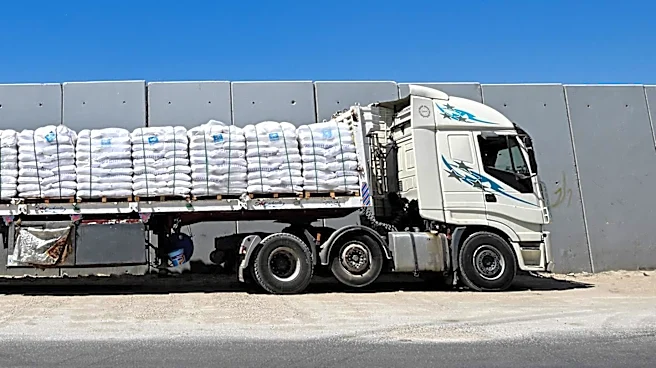
OpenFX, a real-time cross-border money movement platform, announced a new initiative to offer its foreign exchange and settlement services to humanitarian and development organizations at cost. This move aims to address the high costs associated with
transferring aid money through expensive payment corridors, which often involve fragile-currency markets with thin liquidity and wide spreads. Historically, these conditions have led to significant markups, with humanitarian transfers costing up to 5% of the total amount. OpenFX's new policy will charge only the structural costs of executing a transfer, eliminating any additional markup. This initiative is part of a broader at-cost program that OpenFX plans to expand over time. Eligible organizations can apply for this program, with verification taking only a few days.
Why It's Important?
The decision by OpenFX to offer its services at cost is significant as it directly impacts the efficiency of aid distribution. By reducing the financial burden on humanitarian and development organizations, more funds can reach the intended recipients, enhancing the effectiveness of aid efforts. This initiative could set a precedent for other financial service providers, potentially leading to industry-wide changes that prioritize humanitarian needs over profit. The move also highlights the importance of financial innovation in addressing global challenges, particularly in regions where traditional financial systems are less effective.
What's Next?
OpenFX's initiative may prompt other financial institutions to reconsider their pricing models for humanitarian and development organizations. As the program expands, it could lead to increased competition in the financial services sector, encouraging more companies to adopt similar cost-effective measures. Additionally, the success of this initiative could influence policy discussions around the regulation of financial services for non-profit organizations, potentially leading to new standards that prioritize transparency and cost-efficiency.