




What's Happening?
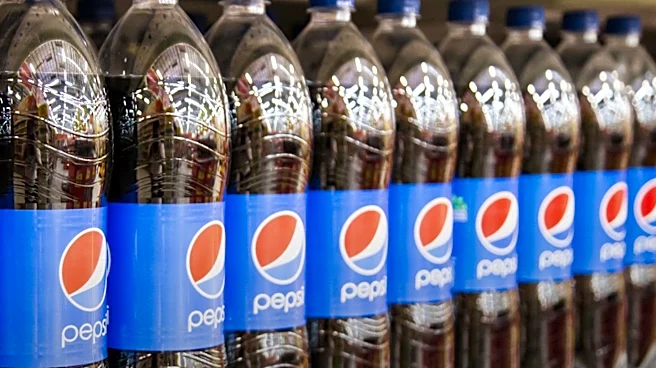
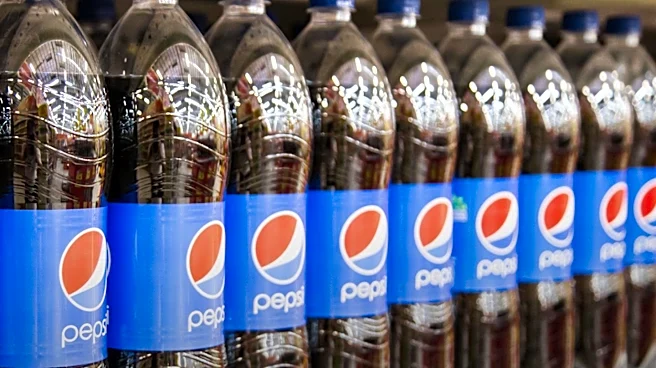
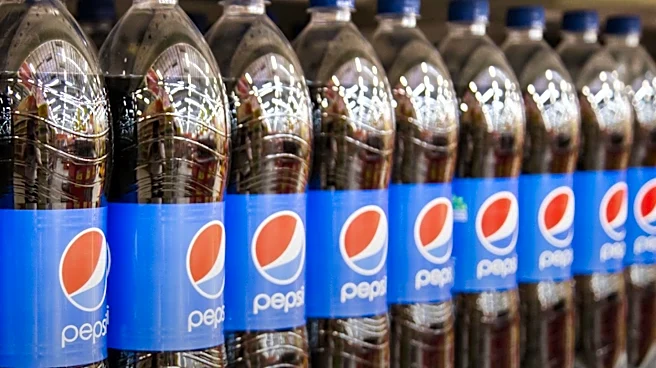
PepsiCo is reportedly planning to eliminate around 1,000 jobs across its food and beverage businesses in North America. This move is part of an initiative to simplify the company's structure, as indicated by CEO Ramon Laguarta last month when he mentioned
identifying “structural cost reduction actions.” Ram Krishnan, CEO of PepsiCo North America, communicated these upcoming changes to employees, noting that the current operational framework is overly complex and fragmented. The company aims to streamline its structures, clarify accountability, and accelerate decision-making processes. This decision follows PepsiCo's recent reduction in its 2026 core earnings per share growth outlook, which was lowered from a range of 4% to 6% to 1% to 2% due to rising input costs and other factors. The job cuts are expected to be implemented in the coming week.
Why It's Important?
This significant job reduction at PepsiCo underscores the increasing pressure on large consumer goods companies to optimize operations and reduce costs in a challenging economic environment. The lowered earnings outlook and the emphasis on “structural cost reduction actions” highlight broader industry trends where companies are grappling with rising input costs and the need for greater efficiency. For the U.S. market, these job cuts could signal a period of consolidation and restructuring within the food and beverage sector, potentially impacting employment rates and consumer prices. The focus on simplifying corporate structures and improving decision-making speed reflects a strategic shift to enhance competitiveness and profitability. This could lead to a more agile PepsiCo, but also raises concerns about the immediate impact on the affected workforce and the potential for similar actions by other major corporations facing similar economic headwinds.
What's Next?
PepsiCo is expected to proceed with the announced job cuts in North America in the coming week, as communicated by Ram Krishnan to employees. The company will likely continue to implement its strategy of structural simplification and cost reduction to address margin pressures and improve its financial outlook. Investors and analysts will be closely watching for further details on the impact of these changes on PepsiCo's operational efficiency and financial performance. The company's ability to achieve its revised earnings targets will depend on the effectiveness of these measures. Additionally, the broader implications for the North American food and beverage industry will be observed, as other companies may follow suit with similar restructuring efforts if economic conditions remain challenging.
Beyond the Headlines
The job cuts at PepsiCo, a major player in the consumer staples sector, reflect a deeper trend of corporate adaptation to evolving market dynamics. Beyond immediate cost savings, these actions could lead to a more centralized and potentially less diverse workforce, impacting corporate culture and employee morale. The emphasis on simplifying structures and accelerating decision-making might also indicate a shift towards greater automation or reliance on technology, which could have long-term implications for employment in the industry. Furthermore, the focus on profitability over workforce stability, while a common business practice, raises questions about corporate responsibility and the social contract between large corporations and their employees, especially in times of economic uncertainty. This could spark discussions about the balance between shareholder value and employee welfare.