



What's Happening?
Homes constructed with dense materials such as concrete, brick, and steel often experience significant Wi-Fi signal degradation, leading to dead zones. Unlike standard drywall, these materials absorb or reflect Wi-Fi signals more effectively, making it difficult
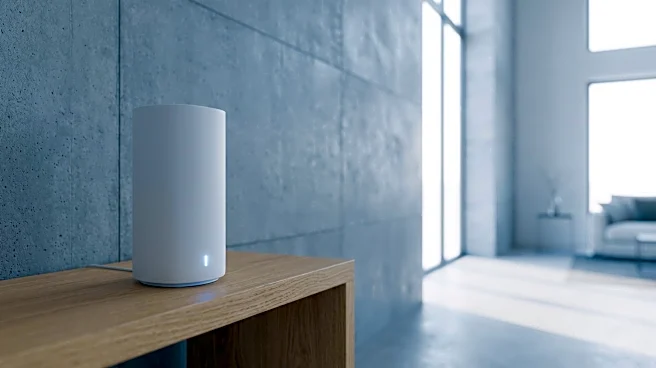
for a single router to provide consistent coverage. Mesh Wi-Fi systems offer a solution by utilizing multiple access points, or nodes, strategically placed throughout a home. This approach ensures that signal coverage is extended to areas where thick walls would otherwise block it. The effectiveness of mesh systems in these environments is primarily due to node placement rather than increased signal strength, as regulatory limits cap router transmission power. Wired Ethernet backhaul, where nodes are connected via cable, further enhances reliability by bypassing the need for wireless signal transmission through dense walls.
Why It's Important?
For U.S. homeowners, particularly those in older residences or properties with robust construction, poor Wi-Fi connectivity can significantly impact daily life, affecting remote work, online education, and entertainment. The adoption of mesh Wi-Fi systems addresses a common frustration, improving internet access and reliability across the entire home. This is crucial in an increasingly connected society where multiple devices simultaneously demand stable internet. The emphasis on wired backhaul in mesh systems for thick-walled homes highlights the importance of infrastructure in optimizing technology performance. This development also influences the consumer electronics market, driving demand for specialized networking solutions and encouraging manufacturers like TP-Link to innovate in this niche, ultimately benefiting consumers seeking robust home network solutions.
What's Next?
The evolution of mesh Wi-Fi technology will likely continue to focus on enhancing performance in challenging architectural environments. Future advancements may include more intelligent node placement algorithms, improved signal penetration technologies, and seamless integration with smart home ecosystems. As Wi-Fi standards evolve, such as with Wi-Fi 7, the challenge will be to ensure these new technologies can effectively navigate physical obstructions. Manufacturers will continue to develop user-friendly installation processes and more aesthetically pleasing designs for mesh nodes to encourage broader adoption. Additionally, there may be a growing market for professional installation services for complex home network setups, particularly in large homes with extensive thick-wall construction, to ensure optimal performance.
Beyond the Headlines
The challenge of Wi-Fi penetration through thick walls underscores a broader issue of how modern technology interacts with existing physical infrastructure. As homes become 'smarter' and more reliant on seamless connectivity, the design and materials of buildings become critical factors in technological performance. This situation highlights the need for architects and builders to consider technological integration during the construction phase, potentially leading to new building standards or smart home-ready designs. Furthermore, the discussion around Wi-Fi signal interference touches upon the invisible infrastructure that underpins our digital lives, revealing how seemingly minor physical obstacles can have significant impacts on our daily routines and productivity. It also emphasizes the ongoing need for consumer education on how to optimize their home networks effectively.