






What's Happening?
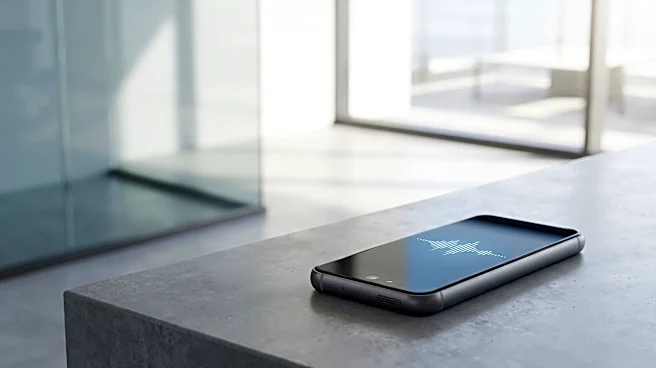
iFLYTEK has announced the release of its AI Translator 4.0 in Australia, making the device available for purchase through its Australian online store. This new device is designed to facilitate real-time language translation for travelers, business professionals,
students, and international users. The AI Translator 4.0 integrates several advanced features, including real-time voice translation for up to 60 languages and regional accents, two-way translation capabilities, and photo translation for up to 50 languages using OCR technology. It also includes a dedicated face-to-face translation mode with a bilingual interface and intelligent noise cancellation, making it suitable for use in various environments, from airports and hotels to business meetings. The device aims to provide a dedicated, portable solution for overcoming language barriers, distinguishing itself from traditional smartphone translation apps by combining a high-definition display, camera, microphones, and AI translation technology into a single, purpose-built unit. Wenchuan Liu, General Manager of Global Consumer Group at iFLYTEK, emphasized that the device is intended to make communication across languages simpler and more natural, thereby removing limitations on travel and business due to language differences.
Why It's Important?
The launch of iFLYTEK AI Translator 4.0 in Australia signifies a growing trend in the development and commercialization of dedicated AI-powered translation devices. This product addresses a critical need for seamless communication in an increasingly globalized world, impacting various sectors. For the business community, particularly those engaged in international trade or with multinational workforces, the device offers a practical tool to enhance cross-cultural interactions, improve customer service, and streamline operations at international events and meetings. Travelers stand to benefit significantly by navigating unfamiliar destinations more easily, from ordering food to understanding local signage. The device's advanced features, such as real-time voice and photo translation, could reduce miscommunication and foster greater understanding between individuals from different linguistic backgrounds. This development also highlights the continuous innovation in AI speech recognition, natural language processing, and machine translation technologies, pushing the boundaries of what dedicated hardware can achieve in practical, everyday applications. The ability to export translation records for later reference also adds a layer of utility for professional use, ensuring that important conversations can be documented and reviewed.
What's Next?
Following its launch in Australia, iFLYTEK will likely monitor the market reception and user feedback for the AI Translator 4.0 to inform future product developments and potential expansions into other international markets. The company may focus on enhancing the device's language support, improving translation accuracy, and integrating new AI functionalities based on user needs and technological advancements. Competitors in the translation technology space may respond by developing similar dedicated devices or by integrating more advanced AI features into existing smartphone applications to maintain their market share. The success of such dedicated devices could also influence the broader travel and business industries, potentially leading to increased international collaboration and tourism as language barriers become less formidable. Furthermore, the data collected from the device's usage could contribute to further research and development in AI and machine learning, leading to more sophisticated translation solutions in the future.
Beyond the Headlines
The introduction of dedicated AI translation devices like the iFLYTEK AI Translator 4.0 has deeper implications beyond immediate convenience. Ethically, these devices raise questions about the future of human language learning and the potential impact on cultural immersion. While they facilitate communication, they might also reduce the incentive for individuals to learn new languages, potentially leading to a decline in linguistic diversity over the long term. Legally, the use of such devices in sensitive business negotiations or official communications could raise concerns about data privacy and security, especially regarding the storage and processing of translated conversations. Culturally, these tools could reshape how people interact across linguistic divides, fostering a more interconnected global society but also potentially homogenizing communication styles. The reliance on AI for translation also brings into focus the accuracy and nuances of machine translation, as subtle cultural contexts and idiomatic expressions can sometimes be lost, leading to misunderstandings despite technological advancements. This technology represents a significant step towards a world where language is no longer a barrier, but its full societal impact will unfold over time.