


What's Happening?
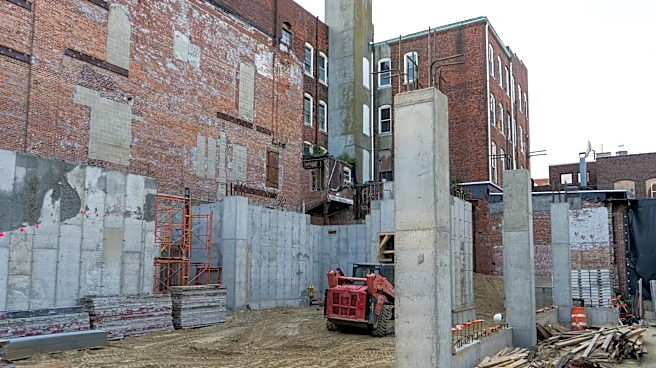
Saab, Inc. has inaugurated a new 50,000-square-foot facility at its North American Headquarters in Syracuse, New York. This expansion is part of Saab's ongoing investment in its U.S. operations, aiming to enhance its capabilities in engineering, product
manufacturing, and testing. The new Aspen Park facility will consolidate several product and production teams onto a single campus. Erik Smith, president and CEO of Saab in the U.S., highlighted that the expansion addresses increasing customer demand for faster delivery. The company currently employs over 600 individuals in Central New York and more than 1,100 nationwide. U.S. Senator Charles E. Schumer noted his advocacy for Saab's growth in Central New York, including securing a $5 million strategic investment in the federal budget to accelerate domestic production of Saab's next-generation radar and sensor systems. This development is also supported by broader investments in advanced manufacturing and technology across Central New York, partly facilitated by the CHIPS & Science Act.
Why It's Important?
This expansion signifies a substantial commitment by Saab to bolster its presence and manufacturing capabilities within the United States. For the U.S. defense ecosystem, it means increased domestic production of critical radar and sensor systems, potentially reducing reliance on foreign supply chains and enhancing national security. The growth in Syracuse, a region with a strong engineering and manufacturing workforce, will create new, well-paying jobs, contributing to local economic development. Senator Schumer's involvement underscores the strategic importance of such investments, particularly in strengthening the Central New York Defense Industrial Base. Furthermore, this move aligns with national efforts to reshore manufacturing and technological innovation, ensuring that the country can meet its defense needs more efficiently and respond to demand more rapidly. The investment also leverages existing regional strengths and federal initiatives like the CHIPS & Science Act to foster a robust technological and manufacturing hub.
What's Next?
Saab plans to open four new manufacturing facilities by 2028, with the Aspen Park facility being the latest step in this commitment. This indicates a continued trajectory of growth and investment in modern facilities designed to support the company's expanding operations. The focus will likely remain on integrating advanced engineering with manufacturing to meet the evolving demands of defense customers. The company's sustained growth in Central New York suggests further job creation and economic benefits for the region. Additionally, the success of this expansion could serve as a model for other defense contractors considering similar investments in U.S. manufacturing and R&D, potentially leading to a broader revitalization of the domestic defense industrial base. Continued collaboration with government initiatives and local workforces will be crucial for sustaining this growth.
Beyond the Headlines
The opening of Saab's new facility in Syracuse reflects a broader strategic shift towards strengthening domestic manufacturing and technological independence in critical sectors like defense. This move is not just about increasing production capacity but also about fostering innovation and securing intellectual property within U.S. borders. The emphasis on advanced engineering and secure spaces highlights the sensitive nature of the technologies being developed, underscoring the importance of protecting national security interests. Ethically, it raises questions about the balance between global supply chains and national self-reliance, especially in times of geopolitical uncertainty. Culturally, it reinforces the value of skilled labor and engineering expertise in American communities, potentially inspiring future generations to pursue careers in STEM fields. This investment could also trigger long-term shifts in regional economic landscapes, transforming areas like Central New York into key hubs for defense technology and advanced manufacturing.