

What's Happening?
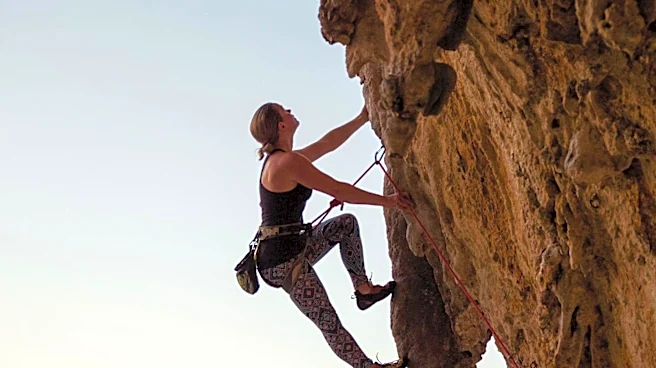
Laura Rogora, a 25-year-old Italian rock climber, successfully redpointed 'Bibliographie' (9b+) at Céüse in France, completing the challenging route in just six days and approximately 16 attempts. This achievement makes her the third woman globally to
climb a 9b+ graded route. 'Bibliographie' was originally bolted by Ethan Pringle in 2009 and first freed by Alexander Megos in 2020, who initially graded it 9c. However, the grade was later downgraded to 9b+ after Stefano Ghisolfi discovered new sequences in 2021. Other climbers who have repeated the route include Sean Bailey (2021), Seb Bouin (2023), Jorge Díaz-Rullo (2023), and Janja Garnbret (two months prior to Rogora's ascent). Rogora's rapid ascent is particularly notable given that other climbers typically require significantly more time and attempts for routes of this difficulty.
Why It's Important?
Laura Rogora's ascent of 'Bibliographie' is a significant milestone in the sport of rock climbing, particularly for women in the discipline. Her ability to complete a 9b+ route in such a short timeframe highlights her exceptional skill, strength, and strategic approach to climbing. This achievement pushes the boundaries of what is considered possible in sport climbing and inspires other athletes to pursue higher levels of performance. The continuous re-evaluation and occasional downgrading of routes like 'Bibliographie' also underscore the dynamic nature of climbing grades, which evolve as climbers discover new techniques and improve their physical capabilities. This progression contributes to the overall advancement and competitiveness of the sport, attracting more participants and spectators globally.
What's Next?
Rogora's remarkable performance on 'Bibliographie' will likely solidify her position as one of the world's elite rock climbers and could lead to further attempts at other high-difficulty routes. Her training regimen, which included two days on the route followed by a day of weights and a day of rest, offers insights into effective strategies for tackling extreme climbs. The discussion around the precise grading of 'Bibliographie' and other routes of similar difficulty will continue, as new ascents and beta discoveries can influence perceived difficulty. This ongoing evolution in grading and technique will continue to shape the future of sport climbing, encouraging innovation and pushing the limits of human athletic achievement in the sport.
Beyond the Headlines
Rogora's ascent transcends mere athletic achievement, highlighting the mental fortitude and problem-solving skills inherent in elite rock climbing. The 'adrenaline during the send' and the strategic recovery between attempts reveal the psychological demands of the sport, where managing fear, pain, and fatigue is as crucial as physical strength. Her disciplined approach to training, including weightlifting to avoid consecutive rest days, demonstrates a holistic understanding of performance optimization. This event also contributes to the broader narrative of women's increasing prominence and success in traditionally male-dominated sports, challenging stereotypes and inspiring a new generation of female athletes. The collaborative aspect of climbing, where new sequences and beta are shared and refined, underscores a unique community spirit within the competitive environment.