
What's Happening?
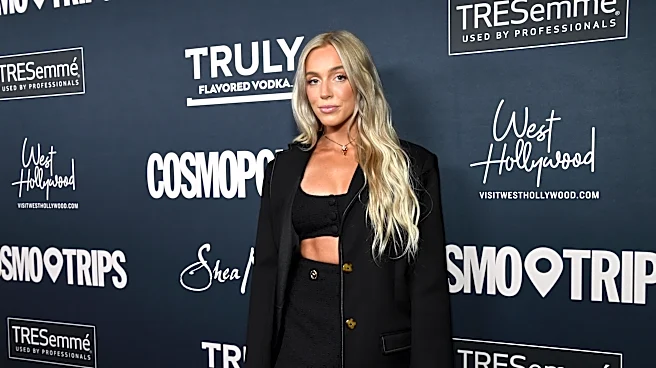
Sofia Franklyn, co-host of the popular podcast 'Call Her Daddy,' has publicly shared her emotional struggles following an abortion she underwent in 2023. In her new memoir, 'Daddy Issues,' Franklyn describes
experiencing guilt, shame, and grief that have persisted for three years since the procedure. She revealed that she felt unprepared for the profound emotional toll, stating, 'No one prepares you for that part.' Franklyn chose to terminate her pregnancy at age 30 due to concerns that having a child would disrupt her career and established lifestyle. The chemical abortion occurred just 48 hours after she discovered she was pregnant, shortly before a family vacation. She recounted a conversation with her mother, who became pregnant at 21, which prompted Franklyn to reflect on her own life choices, career, and lifestyle. Franklyn noted that her feelings surrounding the abortion are 'still pending,' indicating ongoing processing of the experience.
Why It's Important?
Franklyn's candid account brings to light the often-unaddressed emotional aftermath of abortion, challenging the narrative that such decisions are solely met with relief. Her experience highlights that individuals may face significant psychological distress, including feelings of grief, guilt, and shame, which can endure for years. This public disclosure from a prominent media personality could encourage broader discussions about post-abortion support and mental health resources. It also underscores the potential gap in pre-procedure counseling regarding the emotional and psychological impacts that may arise. By sharing her story, Franklyn contributes to a more nuanced understanding of reproductive choices and their long-term personal consequences, potentially influencing how healthcare providers and support networks address the comprehensive needs of individuals undergoing abortions.
What's Next?
Sofia Franklyn's memoir is likely to spark further conversations among her audience and the broader public regarding post-abortion emotional health. Her continued processing of these feelings, as she noted, suggests that her journey of healing and reflection is ongoing. This could lead to more public figures sharing similar experiences, fostering a more open dialogue about the complexities of reproductive decisions. Organizations offering post-abortion support may see increased engagement as individuals seek resources for emotional and spiritual healing. The discussion may also prompt healthcare providers to re-evaluate the scope of pre-abortion counseling to include more comprehensive information about potential long-term emotional impacts, ensuring individuals are better prepared for the full spectrum of experiences that may follow.
Beyond the Headlines
Franklyn's narrative delves into the deeper societal implications of career aspirations versus personal life choices, particularly for women. Her decision to end her pregnancy to protect her career and lifestyle reflects a common dilemma faced by many in competitive professional environments. The memoir implicitly questions the societal pressures that may lead individuals to make such choices and the lack of support systems that could enable them to balance career and family. Furthermore, her experience highlights a potential gap in public discourse and medical guidance, where the emotional and psychological aspects of abortion are often overshadowed by the procedural and legal ones. This personal account could contribute to a cultural shift, encouraging more empathy and understanding for individuals navigating complex reproductive decisions and their aftermath, moving beyond simplistic narratives to acknowledge the profound human experience involved.