








What's Happening?
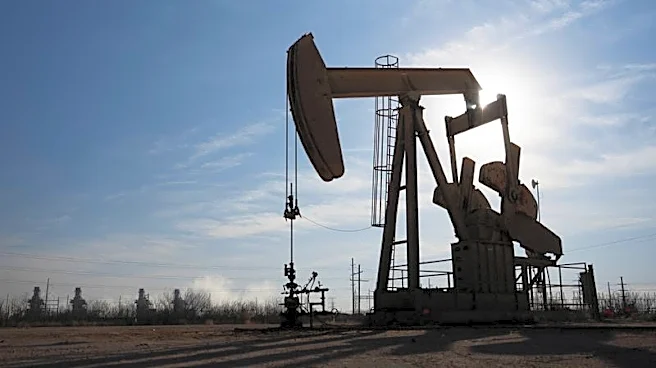
Robert McNally, President of Rapidan Energy Group, has highlighted significant ongoing challenges in the oil market. According to McNally, there remains a substantial deficit in oil supply and inventories, which he describes as an 'enormous hole.' This
situation is attributed to disruptions in oil flows due to recent geopolitical conflicts. McNally predicts that it will take several months for the oil market to stabilize and return to pre-conflict levels of supply. The current state of the oil market is marked by uncertainty and volatility, with potential implications for global energy prices and economic stability.
Why It's Important?
The prolonged challenges in the oil market have significant implications for the global economy, particularly for countries heavily reliant on oil imports. The supply deficit could lead to increased oil prices, affecting transportation costs, manufacturing, and consumer goods prices. This situation may also impact inflation rates and economic growth, as higher energy costs can reduce disposable income and consumer spending. Energy-dependent industries and businesses may face increased operational costs, potentially leading to reduced profitability and investment. Policymakers and industry leaders will need to navigate these challenges to mitigate economic disruptions.
What's Next?
As the oil market continues to grapple with supply challenges, stakeholders will be closely monitoring geopolitical developments and their impact on oil flows. Governments and energy companies may explore alternative energy sources and strategies to enhance energy security and reduce reliance on volatile oil markets. Additionally, there may be increased focus on energy efficiency and sustainability initiatives to mitigate the impact of high oil prices. The situation will require coordinated efforts from international organizations, governments, and the private sector to address the underlying issues and stabilize the market.