




What's Happening?
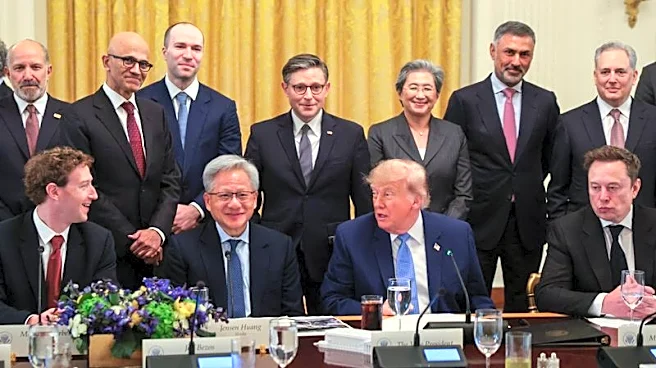
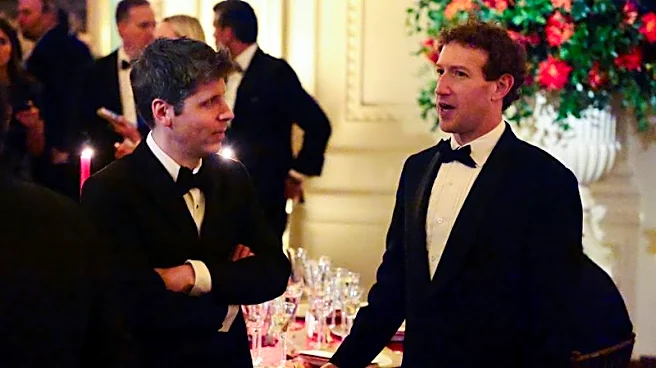
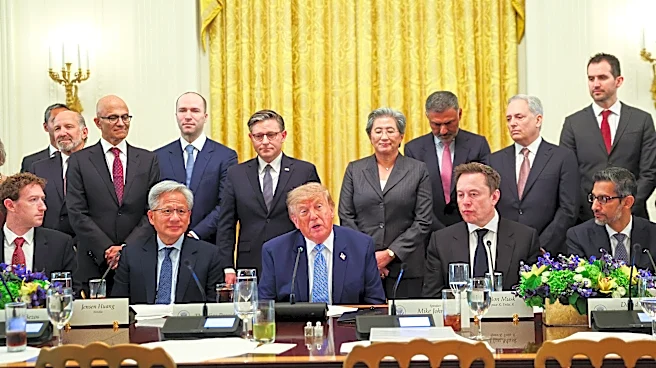
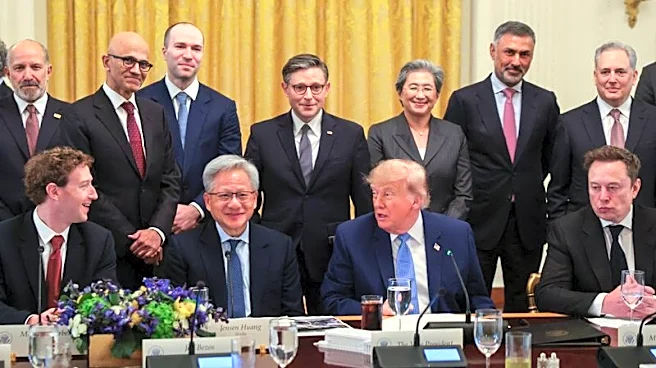
Recent media coverage has focused on the fashion choices of tech oligarchs like Mark Zuckerberg and Jensen Huang, suggesting a lack of original style. Mark Zuckerberg, for instance, was noted for wearing custom Amiri tops and The Row pants. He reportedly
shops for clothes on Instagram and owns numerous Loro Piana items and Loewe shorts. Jensen Huang is known for wearing a uniform of black leather Tom Ford jackets, owning dozens of them. These executives often justify their uniform choices by citing 'decision fatigue,' a reason previously given by figures like Barack Obama and Steve Jobs. However, critics argue that unlike Steve Jobs, whose uniform aligned with his brand of simplifying technology, the current tech leaders' fashion choices do not reflect a deeper, more tasteful approach.
Why It's Important?
The scrutiny of tech oligarchs' fashion is important because it highlights a broader cultural phenomenon where these individuals are increasingly inescapable in media and public consciousness. Their PR teams are actively working to 'fashion-wash' their images, potentially to make them more palatable to the public and to sell their products, such as surveillance glasses. While their immense wealth allows them to purchase high-end brands, their choices are often seen as unoriginal, merely adopting popular labels like Tom Ford and The Row without personal flair. This trend suggests that despite their influence in technology and business, their personal style does not offer unique insights or inspiration, challenging the notion that wealth automatically equates to sophisticated taste. The media's focus on their wardrobes also reflects a societal fascination with the ultra-rich, even when their choices are deemed uninspired.
What's Next?
The ongoing media attention on tech oligarchs' fashion is likely to continue, especially as these figures remain prominent in public discourse through product launches, influencer events, and even upcoming films about their lives. This sustained focus could lead to further attempts by their PR teams to refine their public images, potentially through more curated fashion choices or narratives around their style. However, given the current critical reception, it remains to be seen if these efforts will successfully shift public perception from one of 'no style' to something more positive or influential. The fashion industry may also continue to engage with these figures, as evidenced by events like Anna Wintour's Tech Gala, despite the criticism regarding their sartorial originality. This dynamic suggests a continued interplay between high fashion, tech influence, and public perception.
Beyond the Headlines
Beyond the superficial discussion of clothing, the critique of tech oligarchs' style touches upon deeper implications regarding authenticity, consumerism, and the commodification of personal identity. The argument that 'personal style is a reflection of one’s soul' suggests that the perceived lack of originality in these leaders' wardrobes might indicate a broader detachment or a focus solely on utility rather than self-expression. This could reflect a cultural shift where even the wealthiest individuals, who have the means to explore diverse fashion, opt for uniforms or popular brands without injecting personal character. It also raises questions about the influence of wealth on taste and whether immense financial power can truly buy 'style' in an authentic sense, or merely access to expensive labels. The media's role in excavating and critiquing these choices further underscores a societal desire for genuine expression, even from those at the pinnacle of technological and economic power.