

What's Happening?
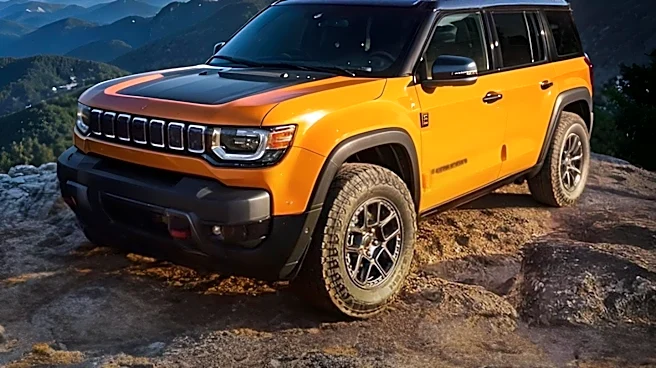
The 2026 Jeep Recon Moab, an all-electric two-row SUV, is drawing attention for its blend of traditional Jeep ruggedness and electric powertrain. The vehicle, similar in size to the Grand Cherokee, features a boxy exterior, removable doors reminiscent
of the Wrangler, and boasts 670 horsepower. Priced at $66,995 for the base model and $73,075 as tested, the Recon Moab is designed for off-road capability, earning Jeep's 'Trail Rated' designation. It includes steel skid plates, a uniquely sealed battery pack for water fording up to 24 inches, and various Selec-Terrain drive modes, including a Rock mode. Despite its off-road prowess and powerful dual-motor setup, the vehicle's performance as an electric vehicle is a significant point of contention. The Recon Moab is built on the STLA Large platform, which has reportedly faced challenges in other Stellantis EV rollouts.
Why It's Important?
The introduction of the 2026 Jeep Recon Moab highlights the ongoing challenges and compromises in the automotive industry's transition to electric vehicles, particularly for specialized segments like off-road SUVs. Its subpar EPA range rating of 222 miles and 400-volt charging architecture, which allows for a 5-80% charge in 28 minutes, are considered mediocre compared to competitors like the Rivian R2 Performance, which offers 307 miles of range with a smaller battery and lower price point. This inefficiency, partly due to its 0.404 coefficient of drag, could deter potential buyers, especially in colder climates where range is further reduced. The high price point, coupled with the absence of federal tax credits, makes it a less attractive proposition for consumers seeking value in the EV market. This situation could impact Stellantis's market share in the growing EV segment and influence consumer perception of electric off-road vehicles.
What's Next?
Jeep plans to release an on-road-focused Overland trim of the Recon, which is expected to offer a slightly improved range of 240 miles, though this may still fall short of market expectations for an EV in its price bracket. The company will likely face continued pressure to address the vehicle's range and charging performance to remain competitive in the rapidly evolving electric SUV market. Future comparisons with direct competitors, such as the Rivian R2, will be crucial in determining the Recon's long-term viability and market acceptance. Jeep may need to consider strategic pricing adjustments or technological enhancements to improve efficiency and range to attract a broader customer base and overcome the current criticisms regarding its EV capabilities.
Beyond the Headlines
The 2026 Jeep Recon Moab embodies a broader industry struggle to reconcile traditional vehicle attributes with the demands of electric powertrains. While it successfully maintains the 'fun factor' and off-road identity associated with the Jeep brand, including removable doors and a convertible-like experience, these features come at the cost of EV efficiency. This situation raises questions about the future design philosophy for electric off-road vehicles: should they prioritize ruggedness and unique brand elements, or should they conform more closely to the efficiency and range expectations set by other EV segments? The Recon's performance could influence how other manufacturers approach electric conversions of their iconic, less aerodynamic models, potentially leading to a divergence in EV design where some vehicles prioritize specialized utility over maximum efficiency.