





What's Happening?
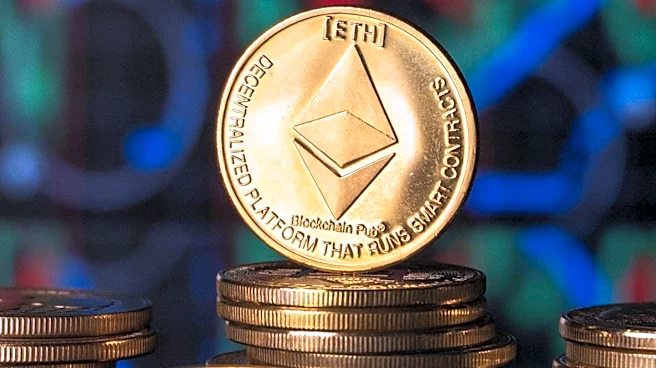
J.P. Morgan's blockchain unit, Kinexys, has expanded its JPM Coin (JPMD) to the Ethereum mainnet as of October 19, 2026. This U.S. dollar deposit token, initially launched on Base in November 2025, is designed for institutional clients. The move aims
to facilitate 24/7 settlement and cross-border interoperability, with partners like DBS already utilizing the tokenized dollar transfers. Both the Ethereum mainnet and Base networks charge gas fees in ETH for JPMD transfers, but the destination of these fees differs. On the Ethereum mainnet, the base fee is burned, reducing ETH supply, and a tip goes to the validator, with the entire fee remaining within Ethereum. In contrast, on Base, almost all of the fee remains with Base's operator, with a small portion paid to Ethereum for transaction batch posting. The method of gas payment for JPMD transfers, whether directly by institutions or through a paymaster contract, has not been explicitly detailed by J.P. Morgan.
Why It's Important?
The expansion of JPM Coin to the Ethereum mainnet signifies a critical step in the institutional adoption of blockchain technology for financial transactions. This development could streamline global financial operations by enabling instant, 24/7 settlement of U.S. dollar deposits, reducing traditional banking hours and delays. For institutional clients, this offers enhanced efficiency and potentially lower transaction costs for cross-border payments. The differing fee structures between Ethereum mainnet and Base highlight a key consideration for institutions: whether their transactions contribute to the broader Ethereum ecosystem through fee burning and validator rewards, or primarily benefit a specific layer-2 operator. This choice could influence the long-term sustainability and decentralization of institutional blockchain applications. The increased interoperability with partners like DBS also suggests a growing network effect for JPMD, potentially setting a precedent for other financial institutions to explore similar blockchain-based solutions.
What's Next?
The future trajectory of JPM Coin will likely involve further integration with other blockchain networks and financial institutions, expanding its reach and utility for institutional clients. The ongoing development of Ethereum's account-abstraction standard (ERC-4337) could simplify gas payment mechanisms, potentially allowing institutions to pay for transactions in tokens other than ETH, which could influence ETH demand. As more institutions explore tokenized assets and on-chain cash legs, the debate over fee routing—whether transactions settle on mainnet or layer-2 solutions—will remain pertinent. This will determine how much institutional activity directly benefits the core Ethereum network versus its scaling solutions. The success of JPMD could also encourage regulatory bodies to develop clearer frameworks for digital assets and blockchain-based financial services, potentially accelerating broader adoption across the financial sector.
Beyond the Headlines
The deployment of JPM Coin on the Ethereum mainnet represents a significant shift in how traditional financial institutions view and utilize public blockchain infrastructure. While J.P. Morgan's initial foray into blockchain was with its private network, the move to Ethereum mainnet indicates a recognition of the public chain's robustness and network effects. This could lead to a gradual blurring of lines between traditional finance and decentralized finance (DeFi), as institutions leverage the transparency and immutability of public ledgers. The choice of network for JPMD transactions also raises questions about the philosophical underpinnings of blockchain: whether the primary goal is efficiency within a controlled environment (like Base) or contributing to a more decentralized, public good (like Ethereum mainnet). This institutional embrace of public blockchains, even with specific fee routing considerations, could pave the way for more complex tokenized financial products and services, ultimately reshaping the global financial landscape.