



What's Happening?
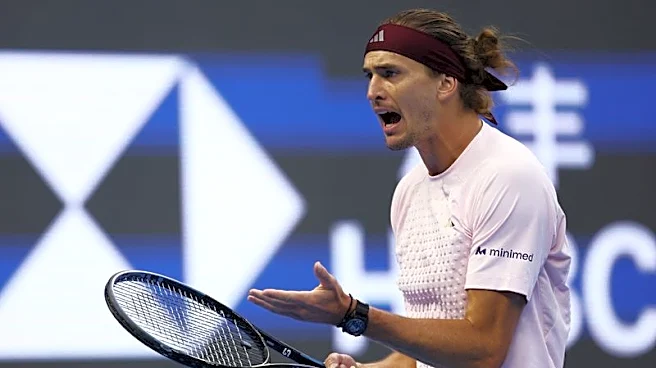
American tennis player Taylor Fritz has sparked fitness concerns following his first-round exit at the Japan Open. He lost to Jaume Munar in three sets (6-7, 6-4, 6-3), with observers noting a 'worrying lack of movement' during the match, particularly
in the final game. This defeat marks a continuation of a challenging period for Fritz, who also had a disappointing Laver Cup campaign where he lost both of his matches. The loss in Tokyo is significant as Fritz was defending finalist points from the previous year's tournament, and this early exit is expected to push him out of the top 10 in the ATP rankings, at least temporarily. His performance has raised questions about the physical toll of the demanding tennis tour, especially after a long trip from the Laver Cup in London to Tokyo.
Why It's Important?
This development is important for U.S. tennis as Taylor Fritz is a prominent American player, and his struggles could impact the country's representation at top-tier international tournaments. His current ranking of tenth in the Race to the ATP Finals means that consistent strong performances are crucial for him to secure a spot in the prestigious year-end event. A drop out of the top 10 could affect his seeding in future tournaments, potentially leading to tougher draws and further challenges in advancing. The physical demands of the ATP Tour are a recurring theme, and Fritz's situation highlights the intense pressure athletes face to maintain peak physical condition throughout the season. This could also influence how other American players manage their schedules and recovery, especially those participating in team events like the Laver Cup followed by individual tournaments.
What's Next?
Taylor Fritz will need to address his fitness concerns and regain form quickly, as the Shanghai Masters and Paris Masters are the final two major opportunities to earn points for the ATP Finals. His ability to recover and perform well in these upcoming tournaments will be critical for his chances of qualifying for Turin. The ranking drop will likely place additional pressure on him to secure deep runs in these events. For other players, particularly those who also participated in the Laver Cup, Fritz's experience might serve as a cautionary tale regarding the physical demands of back-to-back high-stakes competitions and extensive travel. The tennis community will be closely watching his next appearances to see if this is a temporary setback or indicative of a more persistent issue.
Beyond the Headlines
Beyond the immediate impact on Fritz's ranking and ATP Finals qualification, his recent struggles underscore a broader issue within professional tennis: the relentless schedule and its effect on player health and longevity. The physical and mental toll of constant travel, high-intensity matches, and minimal recovery time can lead to injuries and burnout, even for 'superhuman athletes.' This situation could reignite discussions within the tennis governing bodies about calendar reform, player welfare, and the potential need for more structured breaks or reduced tournament commitments. The ethical dimension involves balancing the commercial interests of the sport with the well-being of its athletes, ensuring that players can sustain their careers without compromising their long-term health. Fritz's case may become a focal point in these ongoing conversations about the sustainability of the professional tennis circuit.