



What's Happening?
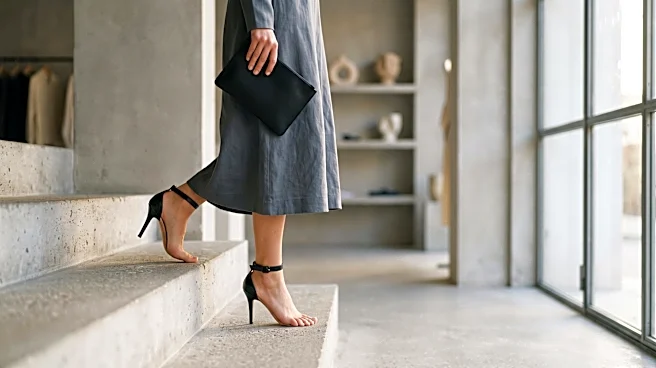
LA-based independent label Jeffrey Campbell has released its own version of the controversial 'barefoot heel' shoe, previously debuted by luxury brand Chanel on the runway. This design features a heel cap, a heel post, and delicate straps around the ankle,
but notably lacks a sole or footbed, meaning the wearer's bare skin directly contacts the ground. The concept initially gained widespread attention when actress Margaret Qualley wore Chanel's version at a red carpet event. Jeffrey Campbell's rendition, teased on Instagram, has ignited significant discussion and outrage across social media platforms. Commenters have expressed confusion and disgust, questioning the practicality and hygiene of walking barefoot on contaminated surfaces while technically wearing heels. The brand is known for commercializing experimental runway designs, often creating more accessible versions of high-fashion shock-art.
Why It's Important?
This development highlights a recurring trend in the fashion industry where avant-garde, often impractical, designs from high-end labels are reinterpreted and made accessible by other brands. Jeffrey Campbell's move to produce a 'barefoot heel' at a potentially lower price point than Chanel's version could democratize a controversial fashion statement, making it available to a broader consumer base. The intense online reaction underscores the power of social media in shaping public perception and driving conversations around fashion trends. It also raises questions about the balance between artistic expression in fashion and practical wearability, as well as the potential for 'rage bait' marketing to generate buzz and sales. For consumers, it presents a choice between embracing a provocative style and prioritizing comfort and hygiene, reflecting evolving attitudes towards fashion norms and personal expression.
What's Next?
The 'barefoot heel' from Jeffrey Campbell is not yet available on the brand's website, suggesting an upcoming release. The ongoing social media debate is likely to continue, potentially influencing sales and further solidifying the shoe's status as a 'rage bait' item. Other fashion brands may observe the public's reaction to gauge the viability of similar unconventional footwear designs. The controversy could also prompt discussions within the fashion industry about the role of practicality versus artistic shock value in design. Depending on its commercial success, this trend could either fade as a fleeting novelty or inspire further iterations of minimalist or 'barely there' footwear, pushing the boundaries of traditional shoe design and consumer acceptance.
Beyond the Headlines
The 'barefoot heel' trend touches upon deeper cultural and psychological aspects of fashion. It challenges conventional notions of footwear, which traditionally serve protective and supportive functions. By removing the sole, the design deliberately subverts these expectations, forcing a re-evaluation of what constitutes a 'shoe.' This could be interpreted as a commentary on societal norms, pushing boundaries of comfort and practicality in the name of style. Ethically, it raises questions about consumer health and safety, as walking barefoot on urban surfaces can expose individuals to various hazards. Culturally, the strong negative reaction on social media reflects a collective discomfort with perceived unhygienic or impractical fashion, highlighting the tension between individual expression and communal standards of appropriateness. It also exemplifies how fashion can be used as a tool for provocation and social commentary, even if unintentional.