



What's Happening?
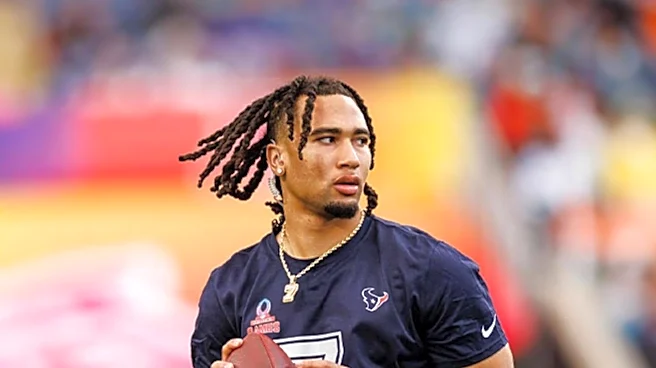
The Houston Texans are confronting significantly higher costs for a contract extension for quarterback C.J. Stroud, whose on-field performance has dramatically increased his market value. Before training camp, the Texans reportedly offered Stroud a deal
around $55 million per year, comparable to Trevor Lawrence's contract, which Stroud declined. Since then, Stroud has excelled, ranking fourth in the NFL with 1,867 passing yards, 11 touchdown passes against one interception, and a 100.7 passer rating through seven games. This stellar play has led an AFC executive to comment that Stroud is "making himself a lot of money." The expectation is still for an extension in the offseason, with owners Cal and Hannah McNair reportedly willing to pay the new market rate. However, the rising cost, potentially reaching $70 million annually, presents a challenge for the team.
Why It's Important?
This situation is important for the Houston Texans as it highlights the financial implications of a star player's rapid ascent in the NFL. Stroud's decision to bet on himself has paid off, but it now places a substantial financial burden on the team. The potential for a contract approaching $70 million per year would significantly impact the Texans' salary cap, especially given their current cap situation. According to ESPN, Houston is already $41.52 million over the 2027 cap, with more committed money than almost any other team. Securing Stroud long-term is crucial for the franchise's future success, but it will necessitate difficult financial maneuvers, potentially involving trading players or restructuring existing contracts to free up cap space. This scenario underscores the delicate balance NFL teams must strike between retaining top talent and maintaining salary cap flexibility to build a competitive roster.
What's Next?
The Houston Texans are expected to pursue a contract extension with C.J. Stroud in the upcoming offseason. However, the negotiations are anticipated to be complex due to Stroud's increased market value and the team's existing salary cap constraints. The Texans will likely need to engage in significant financial restructuring, such as trading players or renegotiating contracts with high cap hits, to accommodate Stroud's new deal. The performance of other top quarterback prospects like Caleb Williams, Jayden Daniels, and Drake Maye, who are also eligible for new deals this offseason, could further influence the market rate for quarterbacks, potentially pushing Stroud's value even higher. The team's general manager, Nick Caserio, has indicated that discussions have occurred, and while a resolution wasn't reached previously, the expectation remains for an agreement in the offseason.
Beyond the Headlines
The escalating contract demands for C.J. Stroud reflect a broader trend in the NFL where elite quarterback play commands an increasingly significant portion of a team's salary cap. This phenomenon can create a 'quarterback dilemma' for franchises: while a top-tier quarterback is essential for success, the financial commitment can limit a team's ability to build a strong supporting cast. Stroud's agent, David Mulugheta, known for his 'play hardball' negotiation style, could further intensify these discussions. The situation also highlights the strategic risk-reward calculations players make when declining initial offers, betting on their performance to increase their value. For the Texans, successfully navigating this negotiation while maintaining a competitive roster will be a critical test of their long-term franchise management and their ability to adapt to the evolving financial landscape of professional football.