







What's Happening?
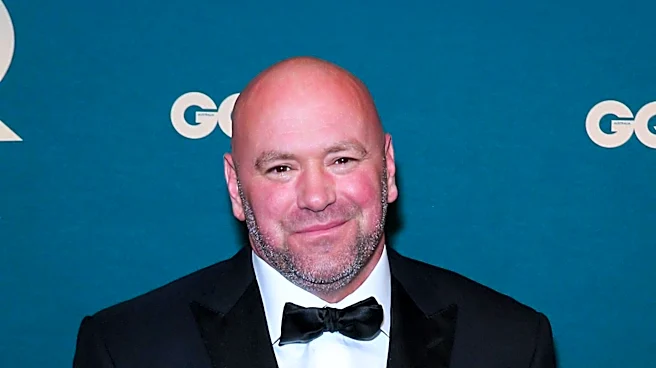
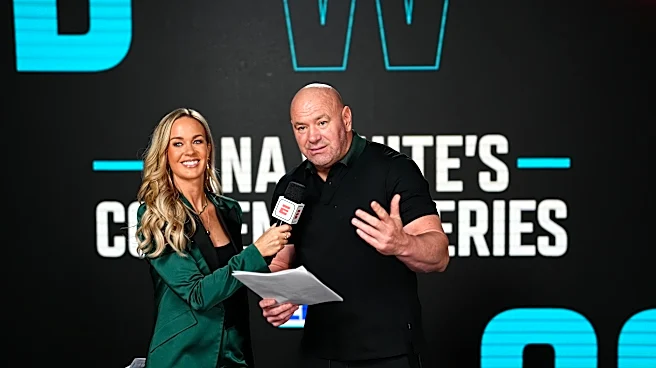
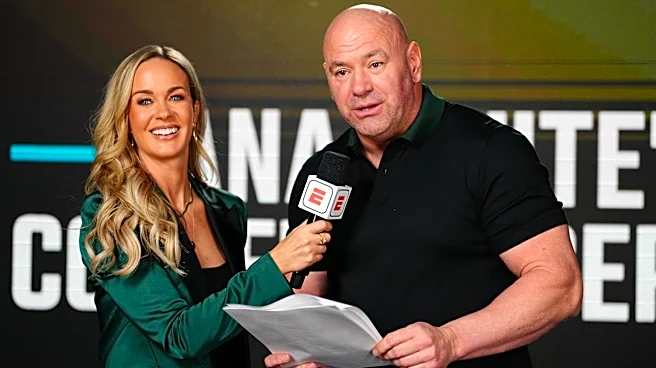
Dana White, President and CEO of the UFC, participated in an interview at the CNBC Sport x Boardroom Game Plan Summit in New York City. During the discussion, White reflected on his journey with the UFC, highlighting key moments such as the acquisition
of the UFC when it was struggling financially and the subsequent growth of the organization. He recounted the pivotal role of 'The Ultimate Fighter' reality show in boosting the UFC's popularity. White also discussed his involvement in other ventures, including Power Slap and boxing, expressing confidence in their potential growth. He shared insights into the challenges and opportunities within the boxing industry, criticizing existing promoters for their lack of sophistication. White also touched on his experience with organizing a fight at the White House, describing it as a significant yet costly event.
Why It's Important?
Dana White's leadership has been instrumental in transforming the UFC into a major sports entity, influencing the broader sports industry. His strategic decisions, such as leveraging reality TV to increase visibility, have set a precedent for sports marketing. White's expansion into boxing and Power Slap indicates a diversification strategy that could reshape these sports' landscapes. His critique of the boxing industry highlights potential areas for innovation and improvement, which could lead to more competitive and transparent practices. The discussion of organizing events at high-profile venues like the White House underscores the UFC's cultural impact and its ability to engage with diverse audiences. White's comments on sponsorship and betting also reflect broader trends in sports economics, where new revenue streams are increasingly important.
What's Next?
Dana White's future plans include further expansion into boxing and the development of Power Slap as a major sports entertainment entity. His confidence in these ventures suggests potential shifts in the sports industry, with new formats and competitions gaining popularity. The UFC's continued growth and diversification could lead to increased global influence and new partnerships. White's involvement with Meta's board indicates a potential intersection between sports and technology, which could result in innovative approaches to fan engagement and content distribution. As the UFC and its associated ventures evolve, stakeholders in the sports industry will likely monitor these developments closely, considering their implications for competition, sponsorship, and media rights.